|
|
|
Hansen's Northwest Native Plant Database |
        |
|
|
|
Hansen's Northwest Native Plant Database |
|
|
|
Calocedrus decurrens (Incense Cedar)
|
 |
||||||||||||||||||||||||||||
|
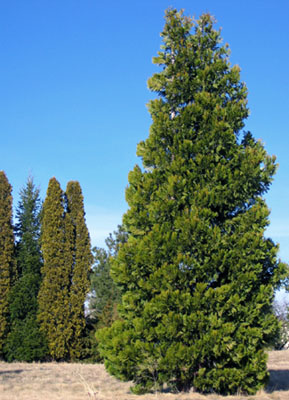
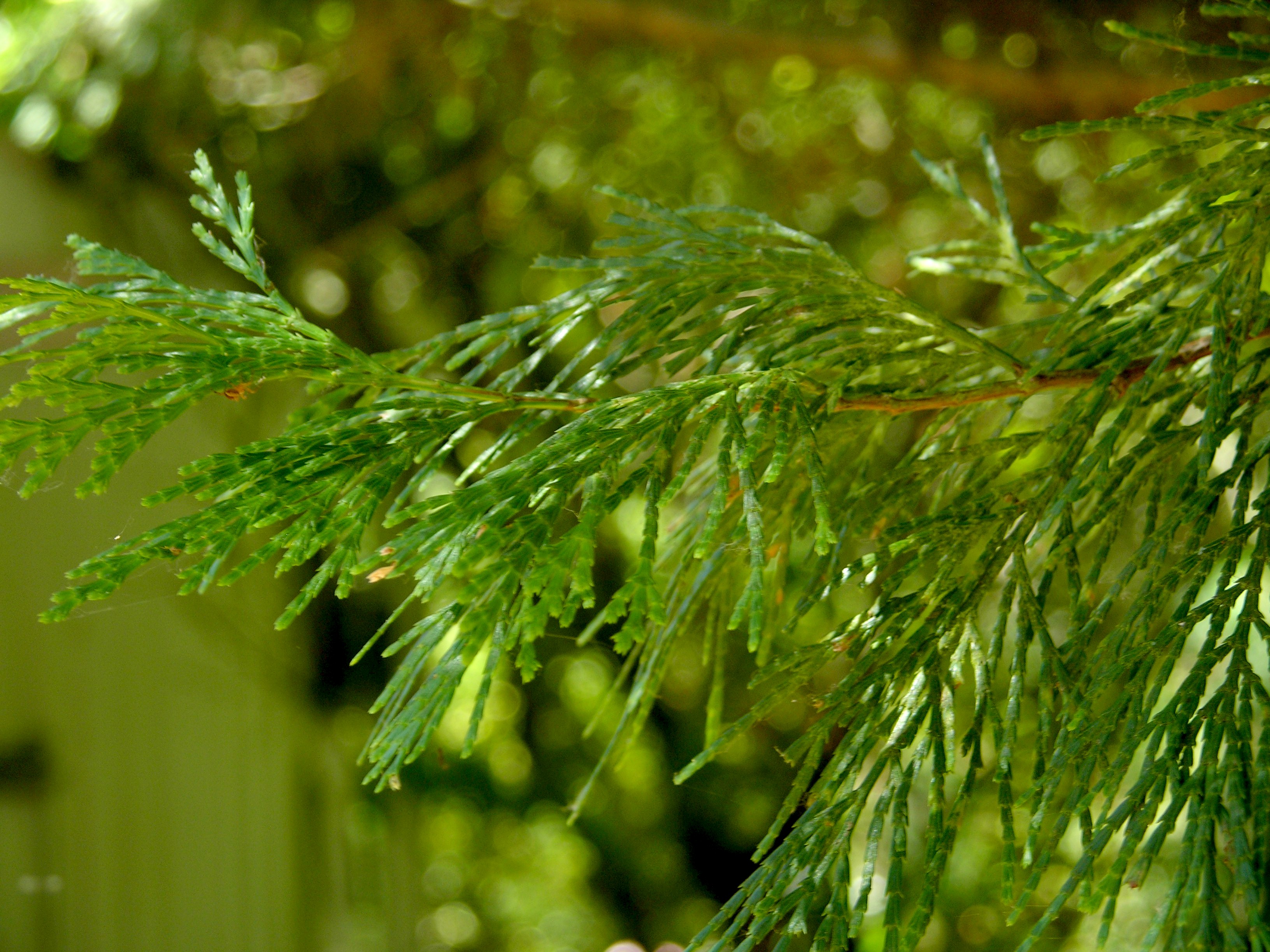
Plant Brief The lustrous foliage of this tree is densely massed and vivid green, flowing right to the ground. The bark is scaled and reddish brown and the cones are small, with six scales. This fast-growing cedar is a wise choice for hedges and screens, especially used along driveways and borders, as it can be sheared to desirable shapes. Such a hedge will protect your privacy, reduce your heating bills and minimize noise, while attracting wildlife and filling the air with its distinct perfume. |
|||||||||||||||||||||||||||||
| The following article was written by Jennifer Bosvert | |||||||||||||||||||||||||||||
|
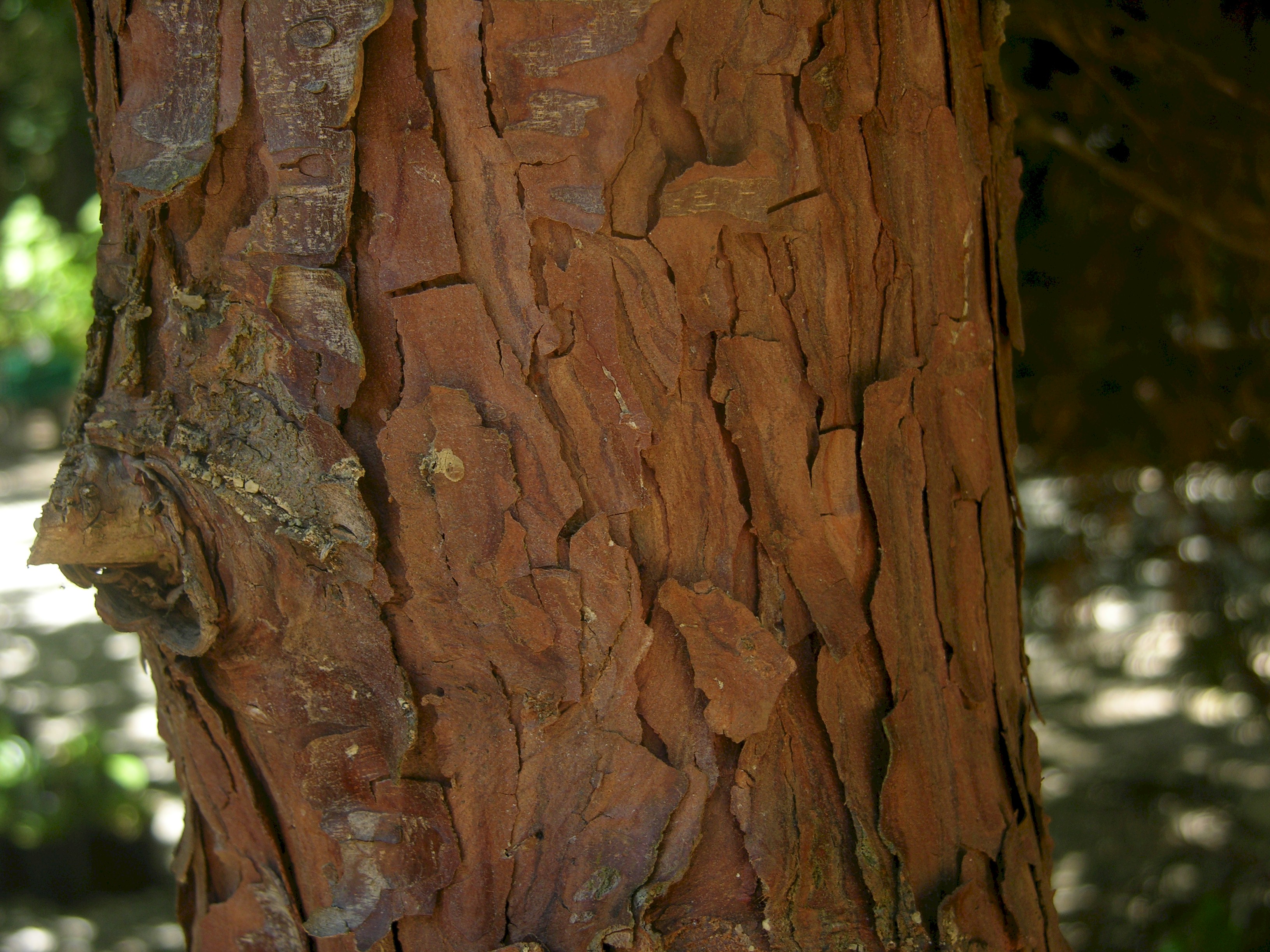
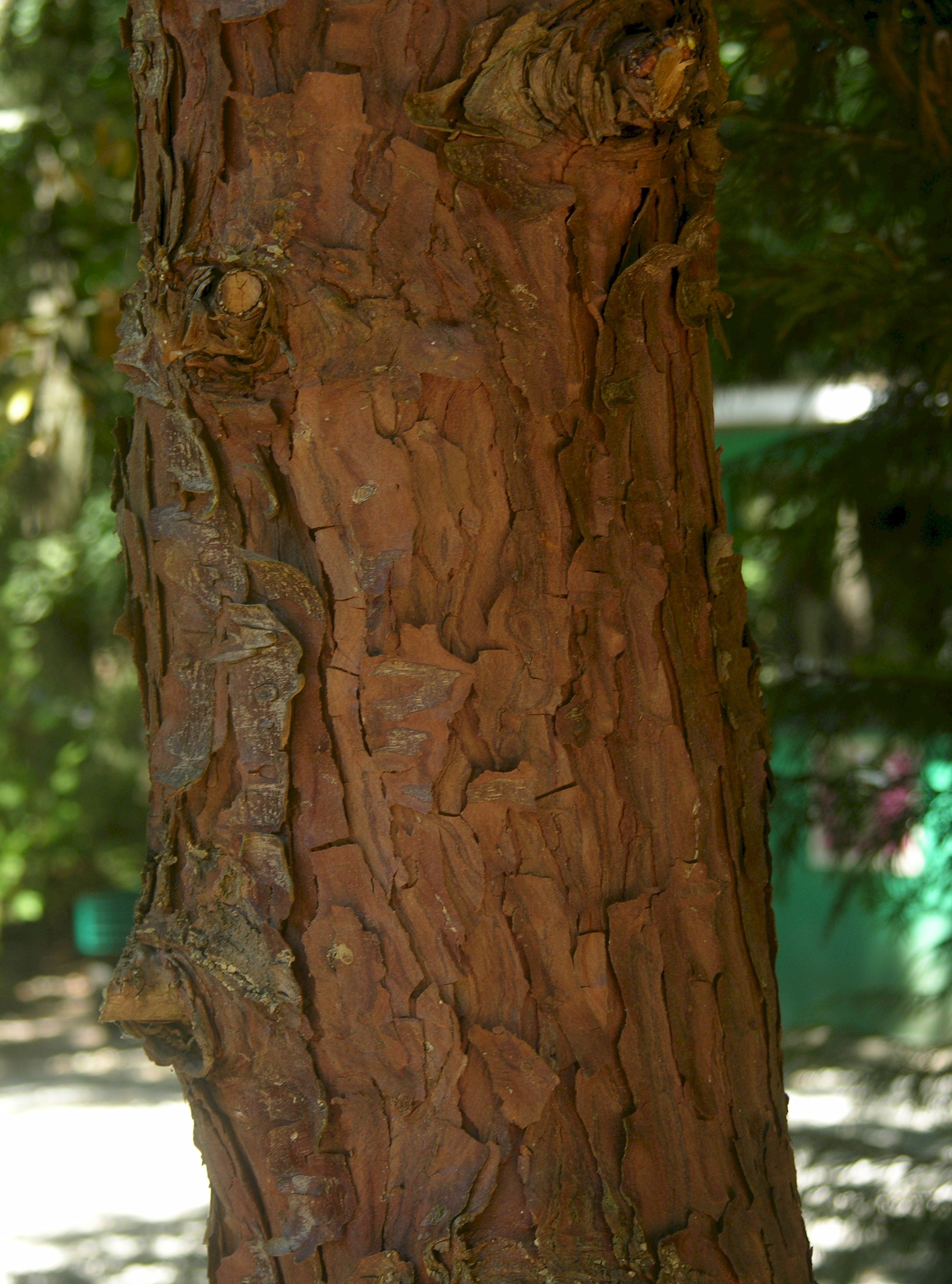
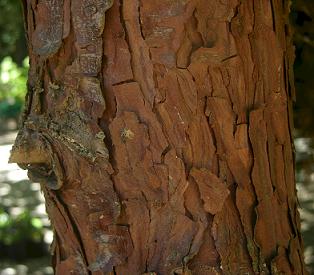
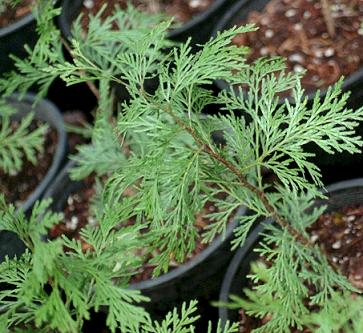
Description Widely used in parks and landscaping, the Incense Cedar is probably the most well-known of the Pacific northwest native false cedars. Unlike the other native false cedars, the Incense Cedar prefers drier, even drought prone areas. In drier areas, the thick green foliage creates a lush backdrop that may be harder to achieve with other trees. Similar in stature to the Western Red Cedar, the Incense Cedar grows to 100’-150’, and 500 years old. The trunk creates the familiar wide base of weathered gray bark, tapering up to a narrowly conical crown. The reddish bark (that weathers gray) grows thick and fibrous, and may be irregularly furrowed up to four inches deep. The lower limbs drape gracefully towards the ground, clothed in thick green foliage. |
 |
||||||||||||||||||||||||||||
|
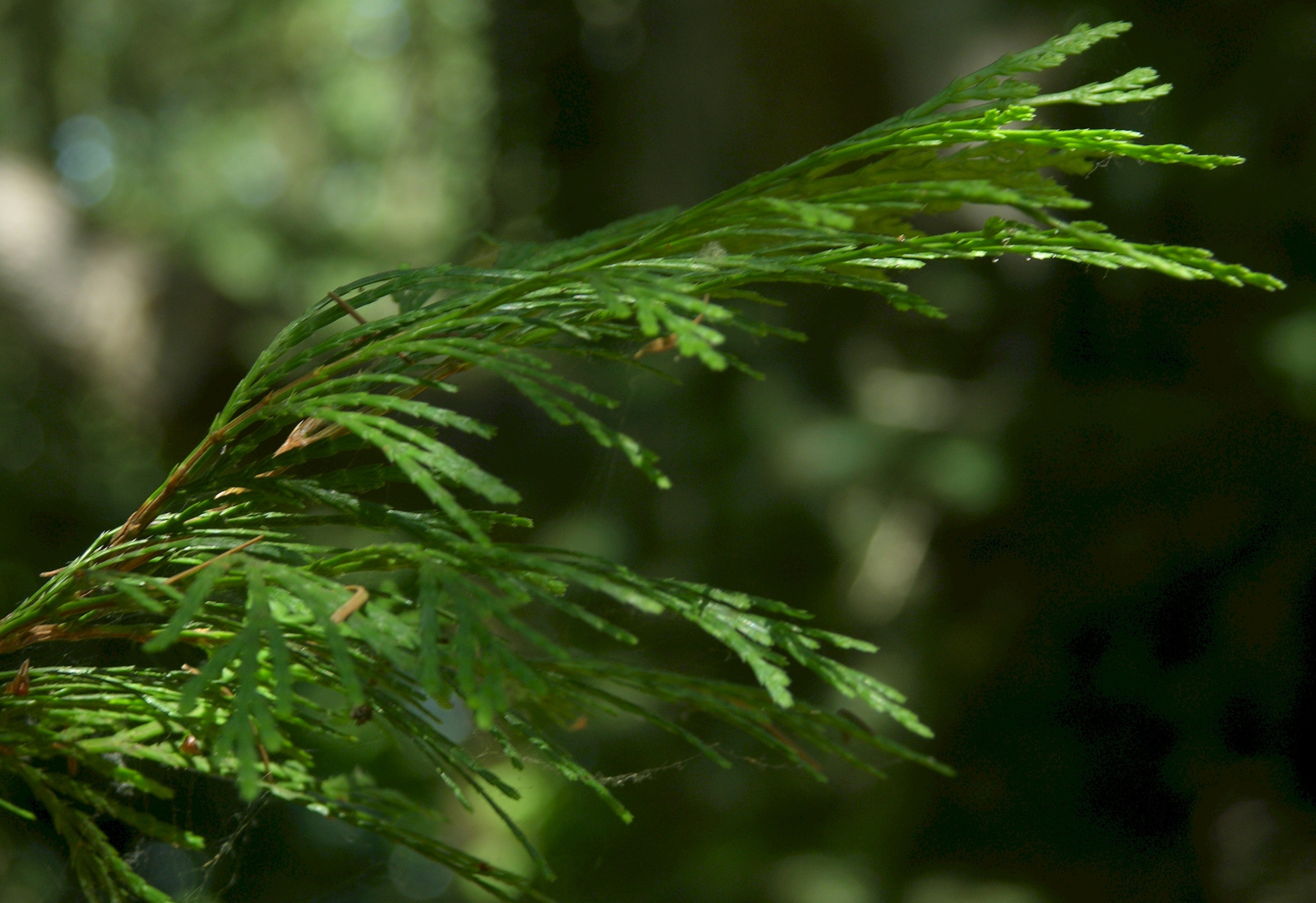
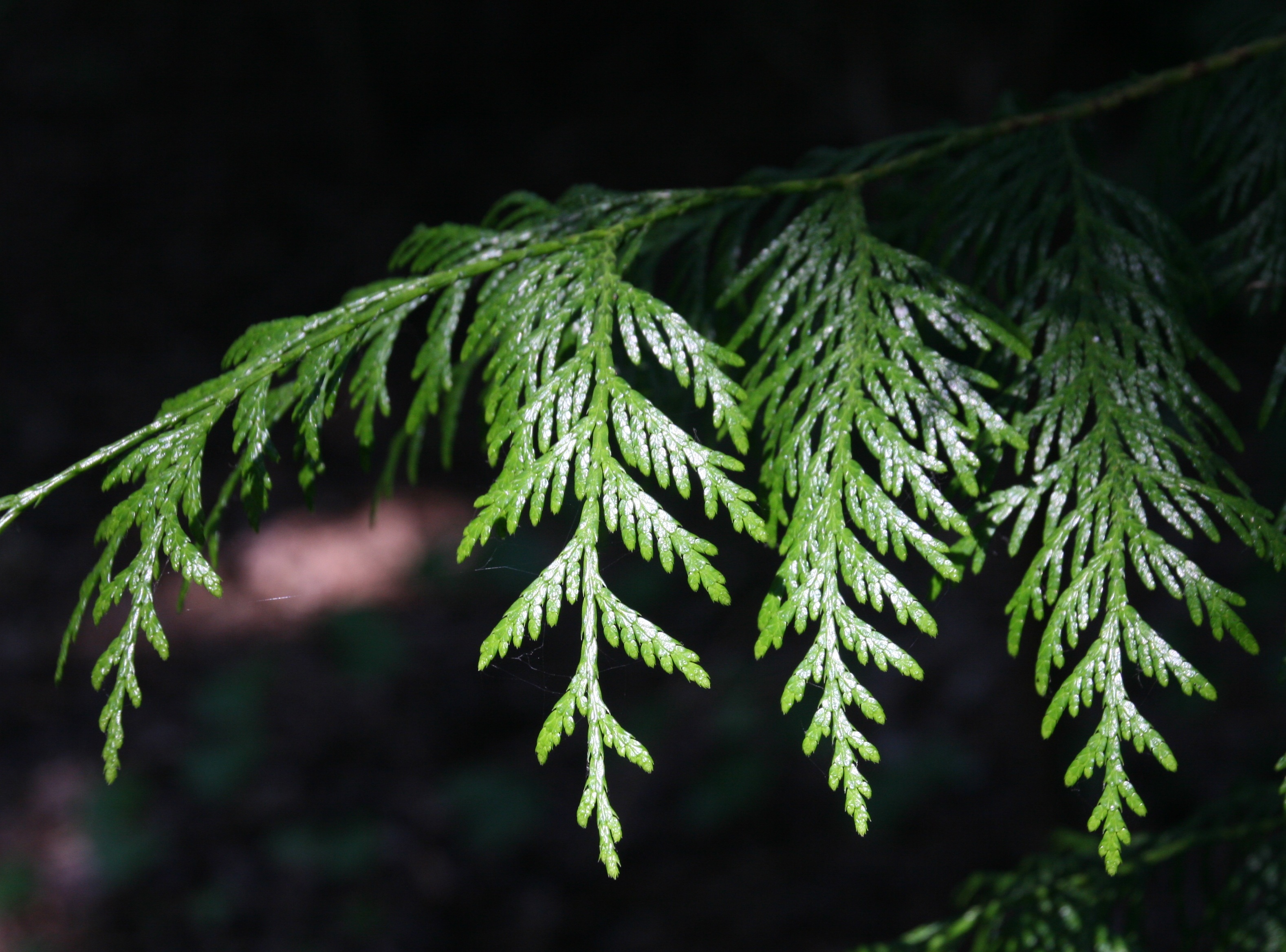
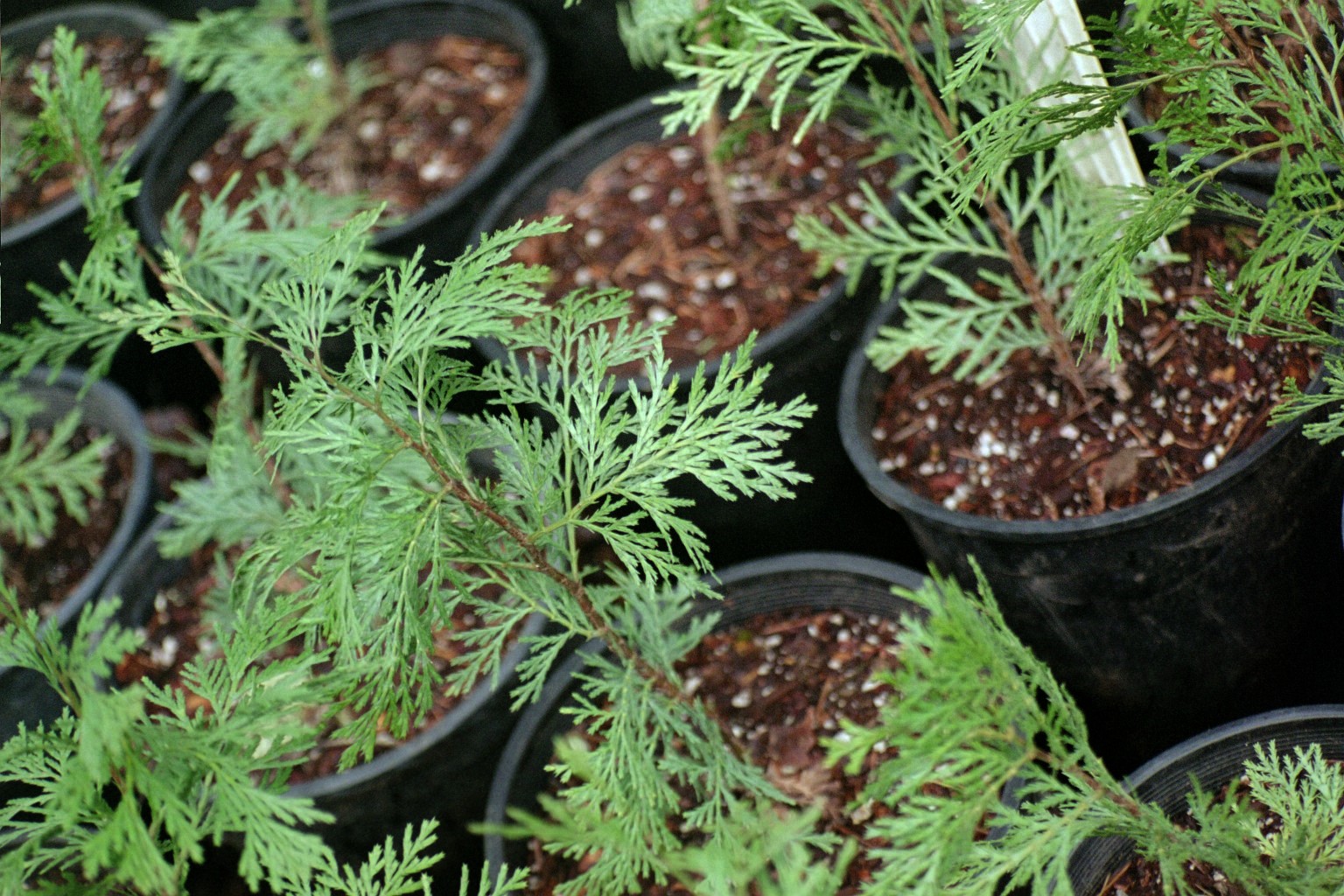
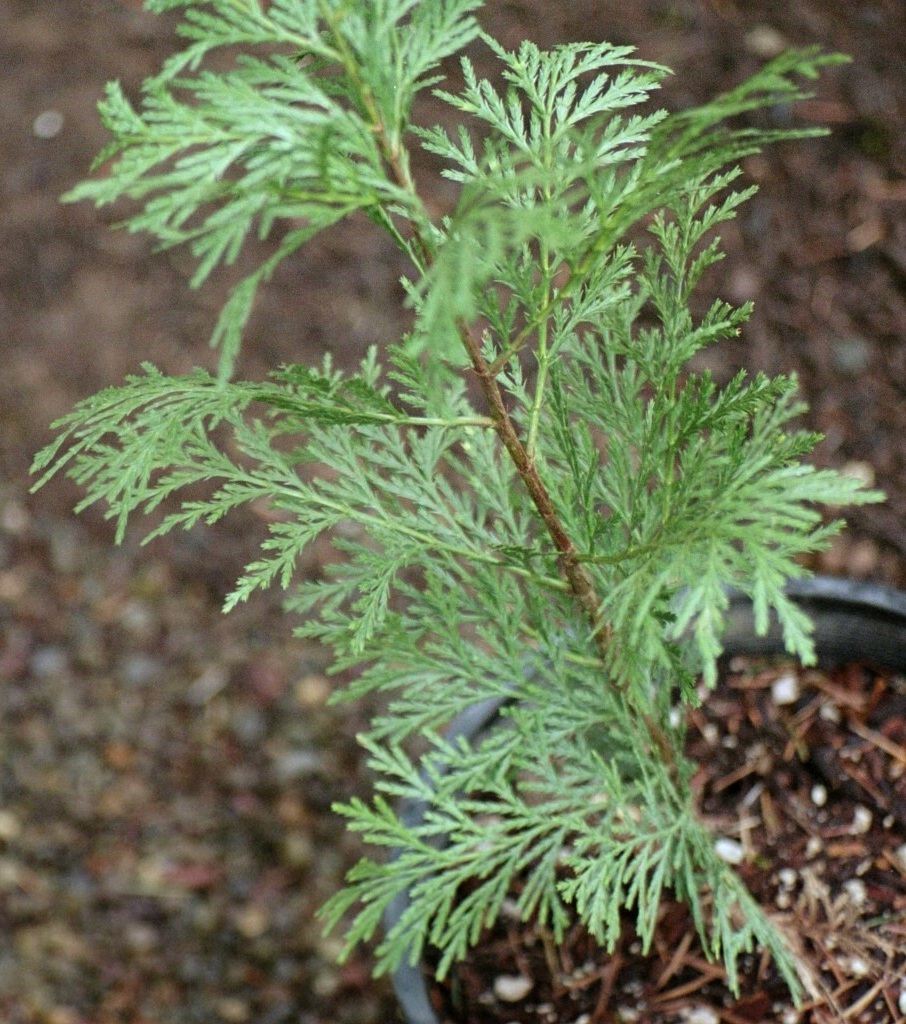
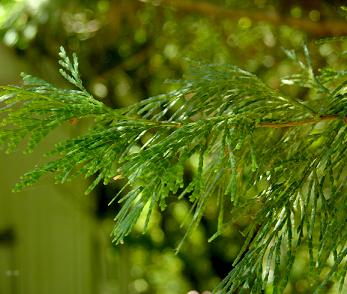
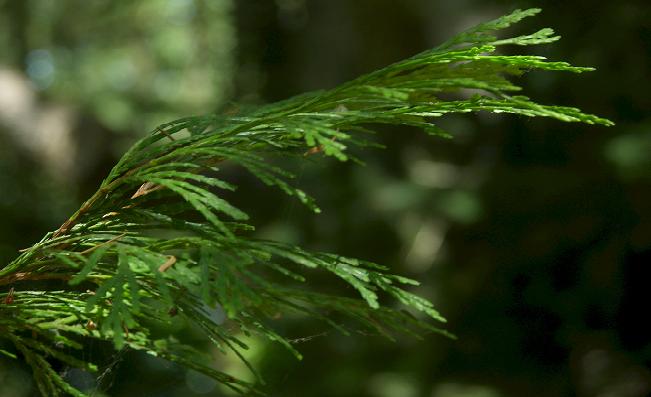
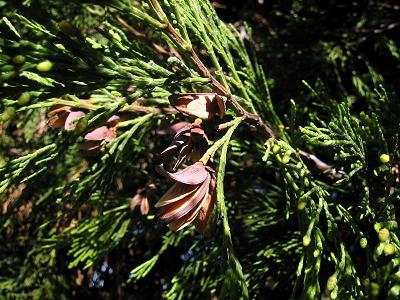
The scale-like leaves are a dark blue-green with no white markings underneath, and are easy to differentiate from other false cedars by the longer scales that resemble the shape of a long-stemmed wine glass. The lush foliage has a pungent, spicy odor when crushed. Male flowers are small and golden-yellow in color, while the cones resemble one-inch long green urns that open into a brown “open duck’s bill.”
Ornamental Values: The lush foliage of this drought resistant and adaptable tree speaks
for its ornamental value.
Trees
grown in open areas will form perfect narrow pyramids and are widely seen
in domestic landscaping. Grown
in a group, the dense foliage makes an excellent windbreak.
Incense Cedar is well adapted to extreme temperatures, grows well
in shade or sun, tolerates poor soil, prefers slightly acidic soil, and
while it will grow well in clay, this tree prefers sandy loam.
Hardy in Sunset zones 1-12 and 14-24, there are not many places
where this tree cannot be grown. One
thing to keep in mind: although drought tolerant, young Incense Cedars
should be watered throughout the first four to five dry seasons. |
 |
||||||||||||||||||||||||||||
|
Native Plant Gardening/Wildlife Habitat Young stands of Incense Cedar that make a thick grove are sometimes used as cover by deer and other larger mammals. In older trees, the deeply furrowed bark makes good habitat for crevice dwellers like bats and brown creepers. Restoration and Mitigation Values: With adaptability to extreme conditions and temperatures, incense cedar is a natural for restoration in more difficult, dry areas, as well as damper more hospitable locations. Calocedrus decurrens has been planted with success to control erosion in mountainous areas, and in Los Angeles County it has been successfully used on road fills, and along streams from 2,000’-6,000.’ Historical and Cultural Uses: As with the other native false-cedars of the west coast, all parts of Calocedrus decurrens were used for some purpose by indigenous peoples. The Cahuilla of southern California used the bark to make temporary shelters, and the wood to construct permanent dwellings. Boughs were often used as brooms, lending an aromatic bonus when sweeping. Many tribes used various parts of the tree, roots and bark for example, in basketry and other weaving. The Washo people from near Lake Tahoe used small limbs of the Incense Cedar for bows. In more modern times, when the supply of eastern red cedar ran short, Incense Cedar made up almost the entire supply of pencil wood in the United States. |
 |
||||||||||||||||||||||||||||
|
Edible and Medicinal
Uses
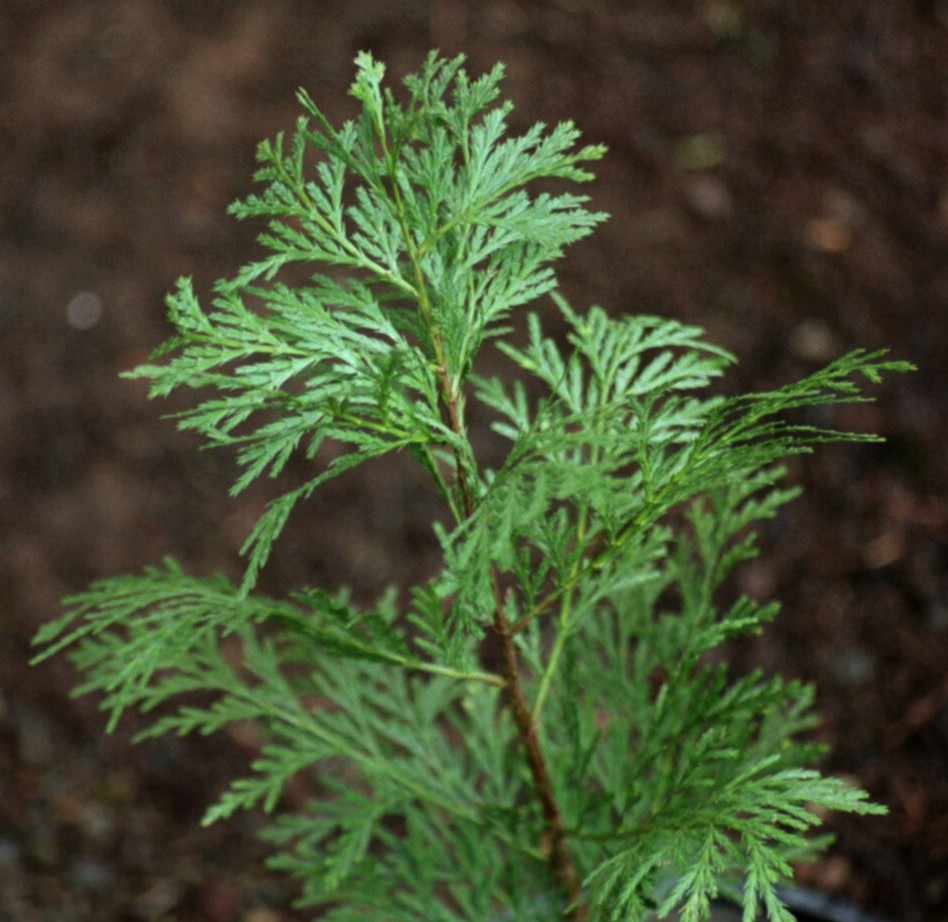
Propagation Techniques: Cuttings and seeds both work well for propagation of Calocedrus
decurrens.
|
 |
||||||||||||||||||||||||||||
Common Diseases: The most common disease in Incense Cedar is a dry pocket rot that generally only affects the quality of the wood harvested from the tree, and is of negligible importance to gardeners. Most fungi only affect very old trees, although occasionally a root fungus, Heterobasidion annosum, will cause enough damage to result in blow down. Beetles occasionally feed on the cambium, but rarely become numerous enough to seriously damage a tree, and parasitic mistletoe will grow on Incense Cedar, but is also of negligible concern. See Identification of False Cedars for more information. |
|
|
Photos We Share!
|
||||||||||||||||||||||||||
|