|
|
|
Hansen's Northwest Native Plant Database |
        |
|
|
|
Hansen's Northwest Native Plant Database |
|
|
|
Arbutus menziesii (Pacific
Madrone, Madrono, Madrona, Bearberry, Refrigerator Tree, Strawberry Tree)
|
 |
||||||||||||||||||||||||||||||
|
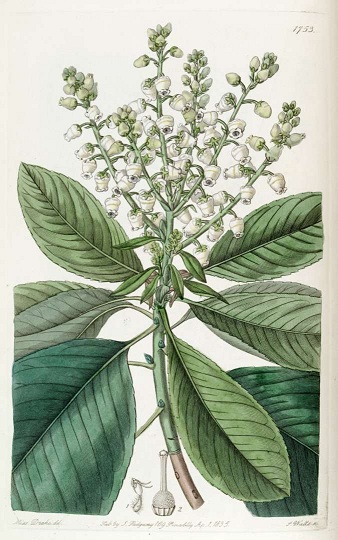
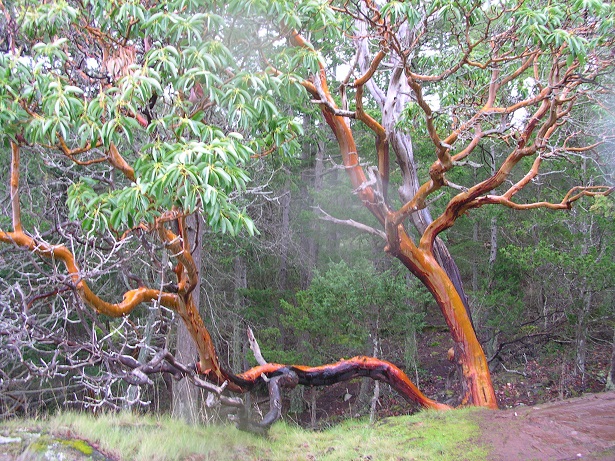
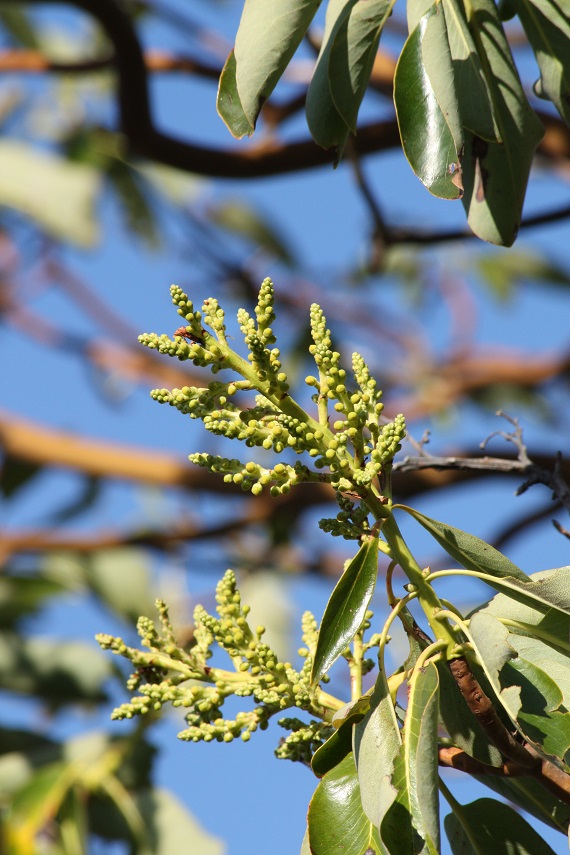
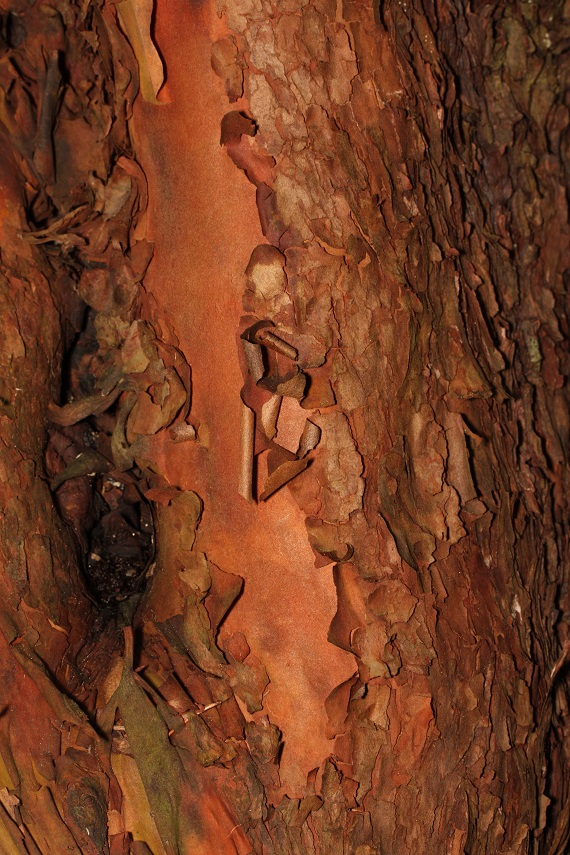
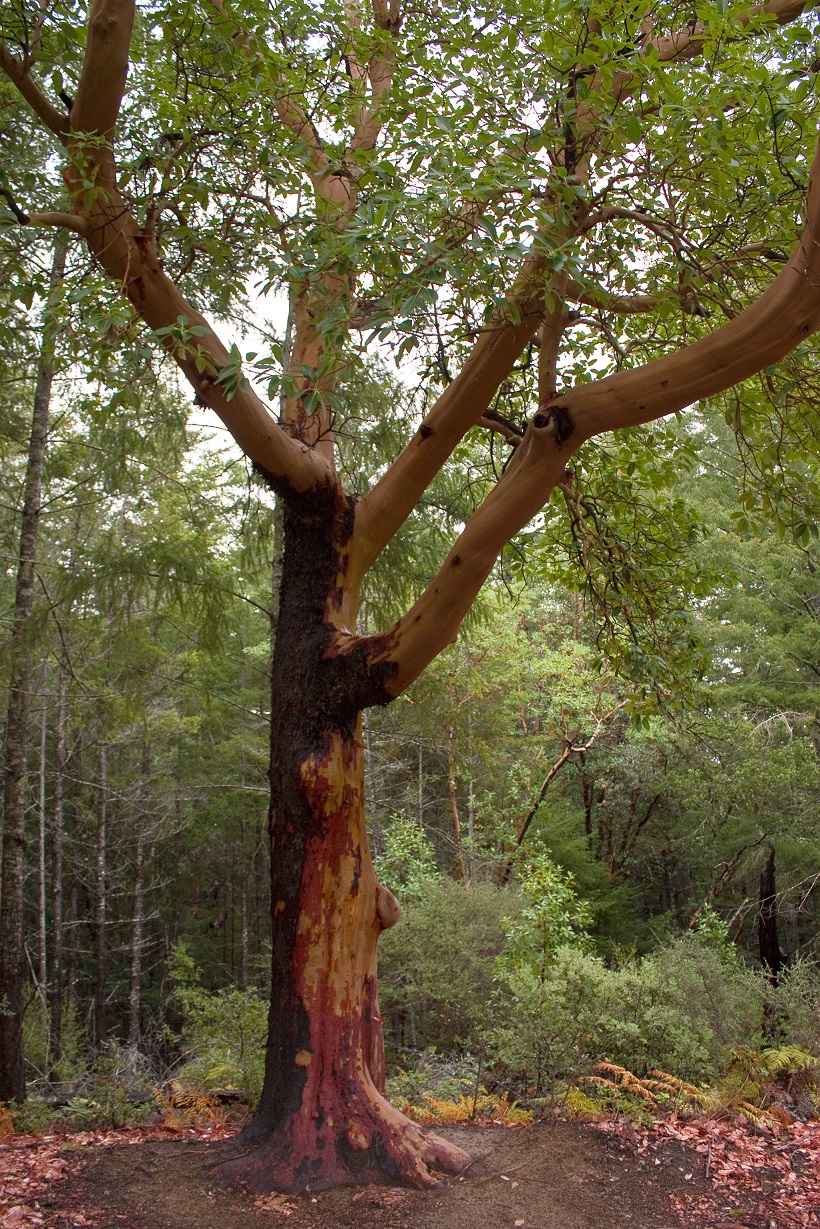
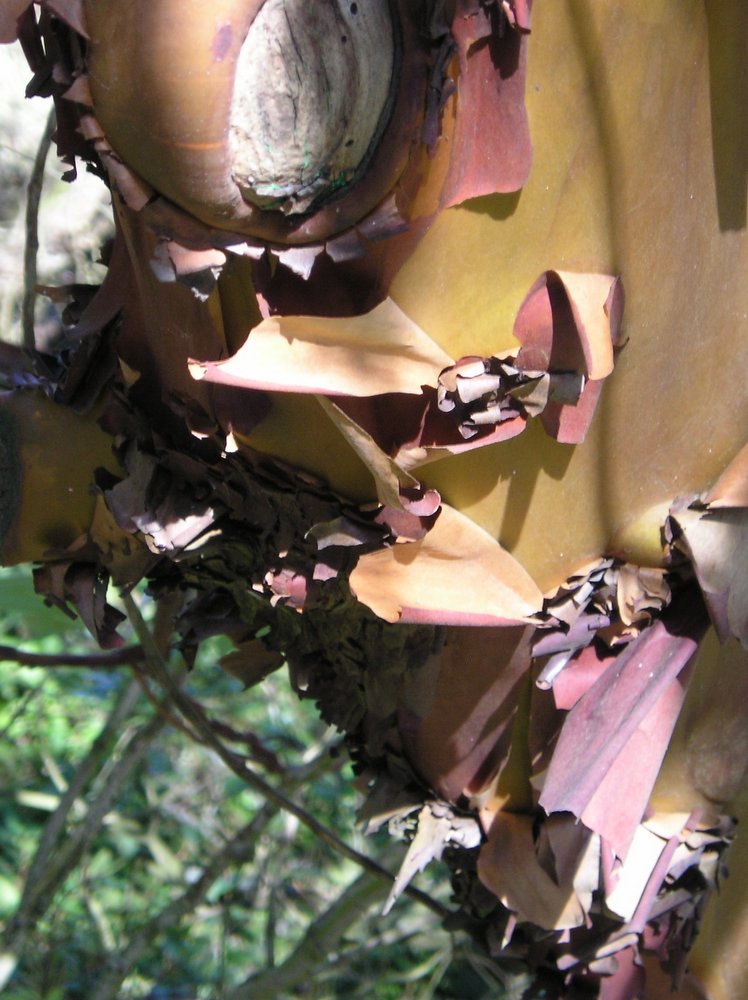
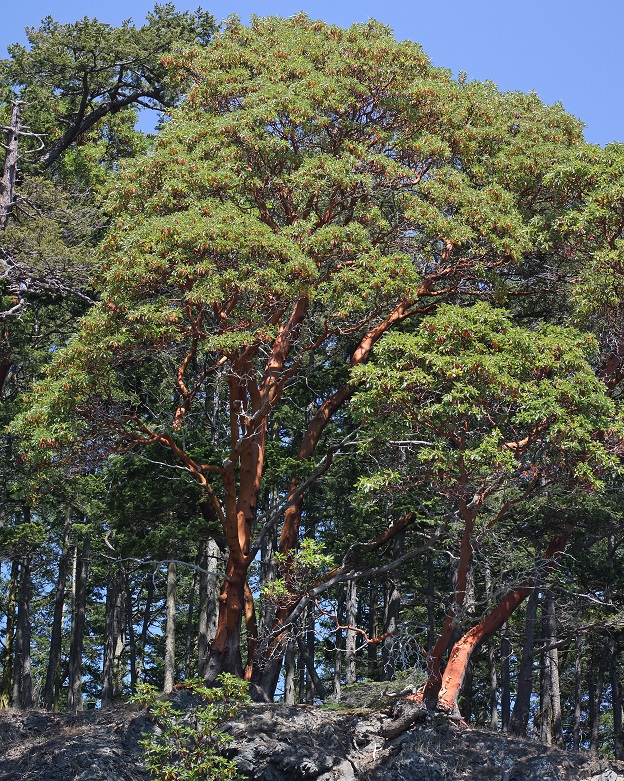
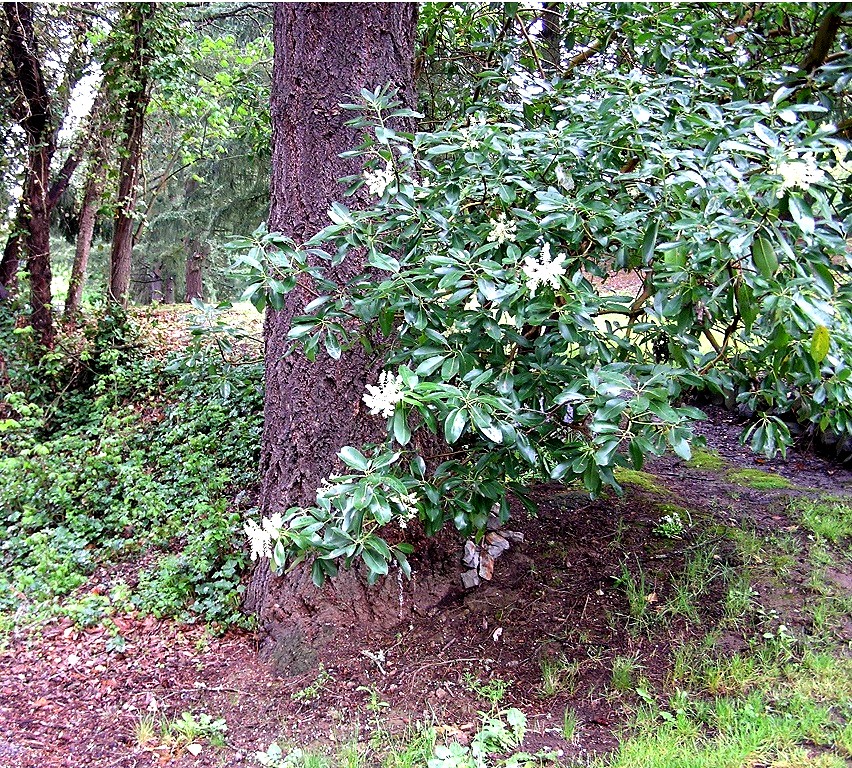
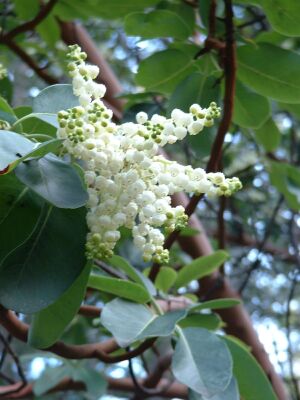
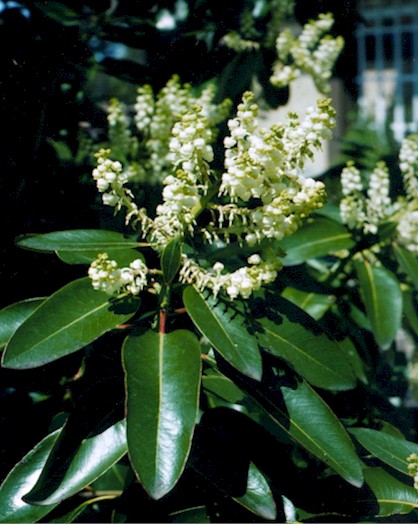
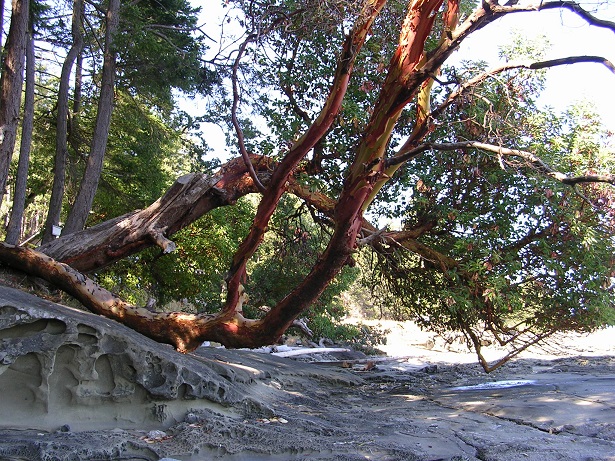
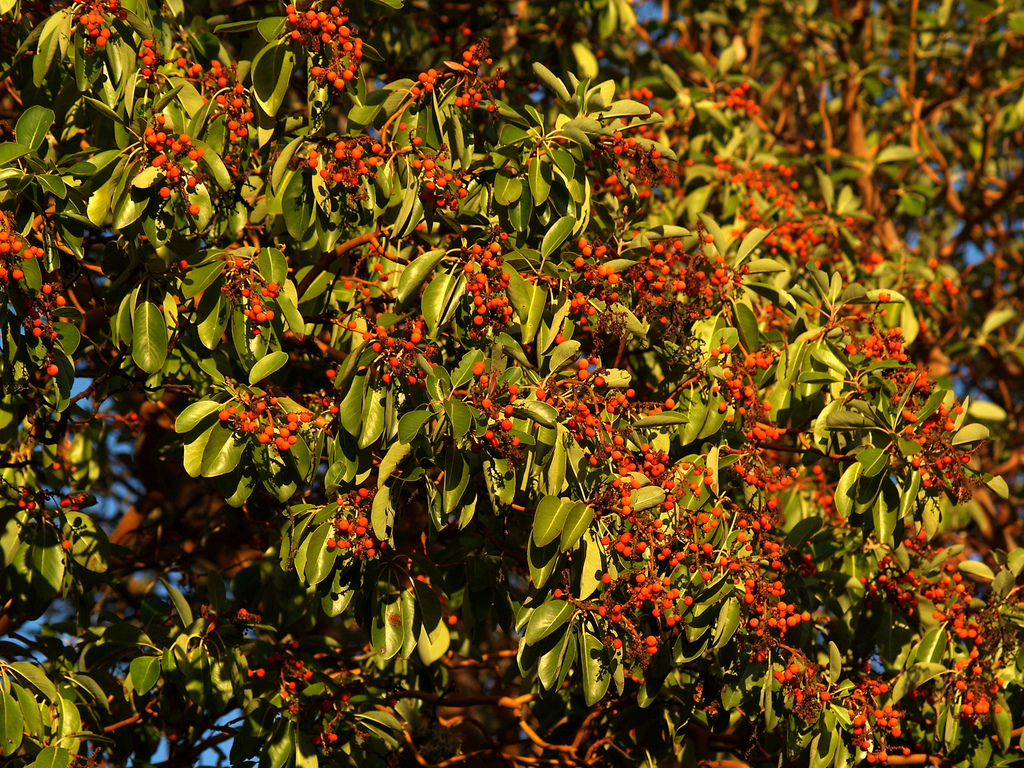
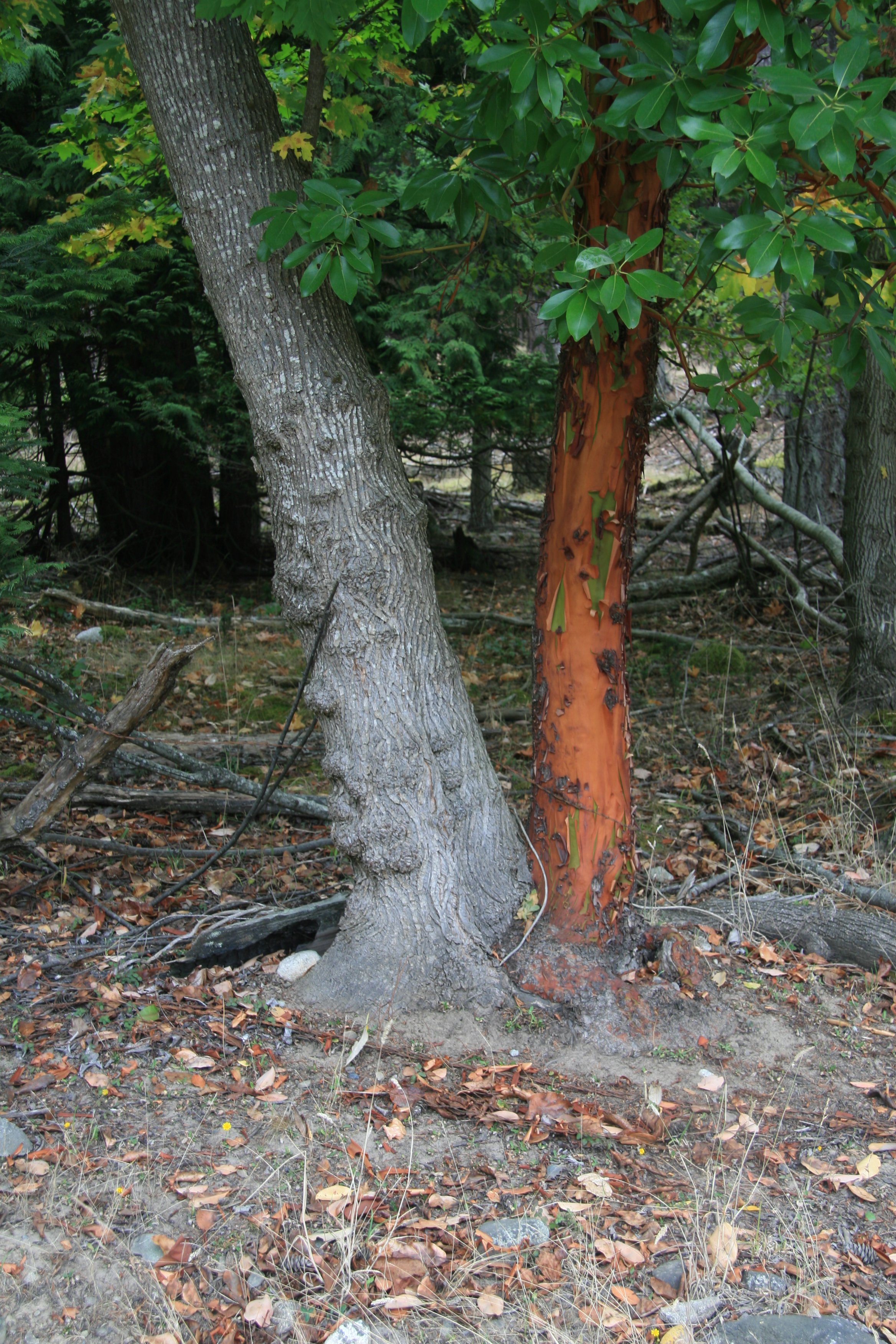
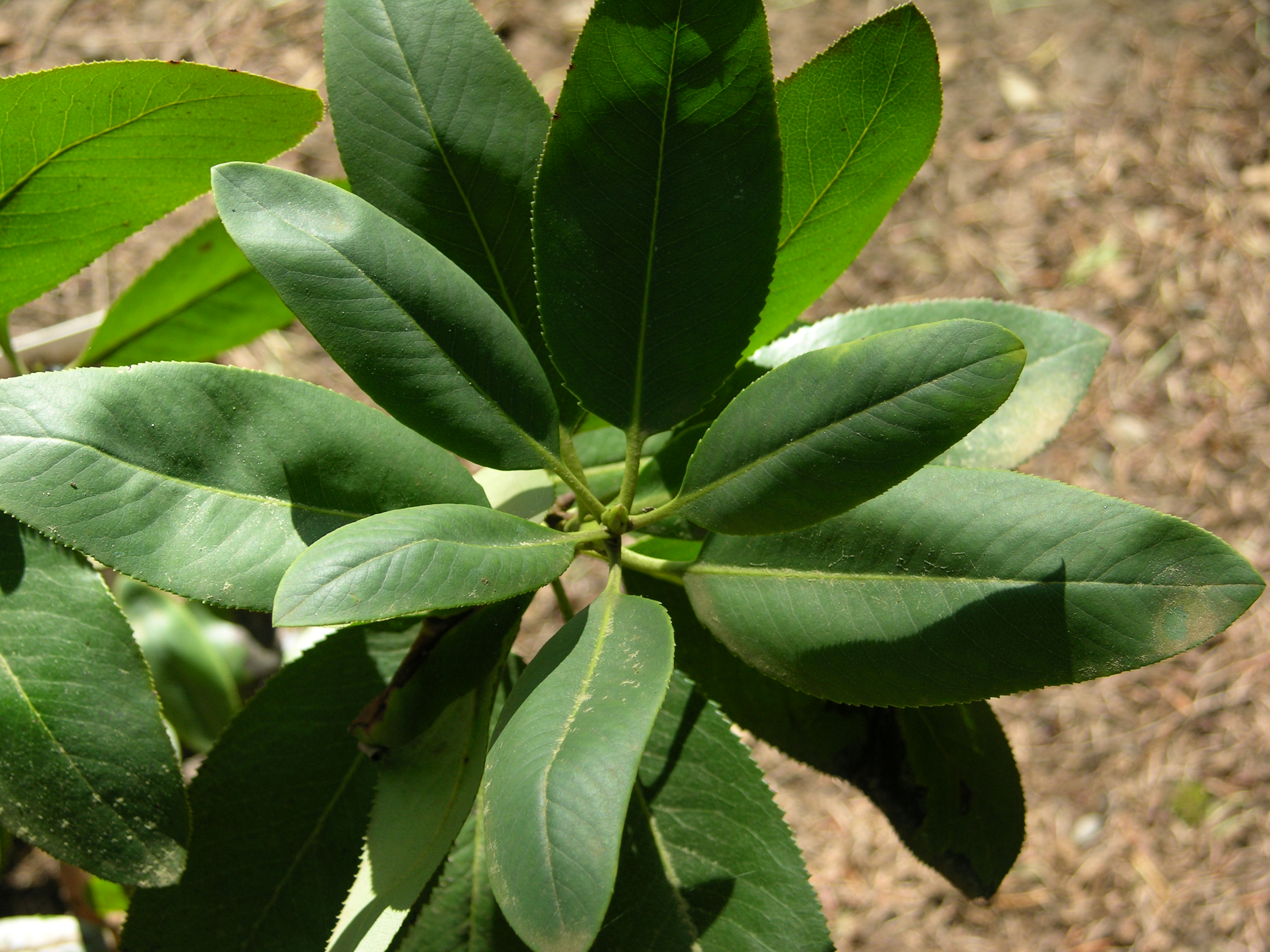
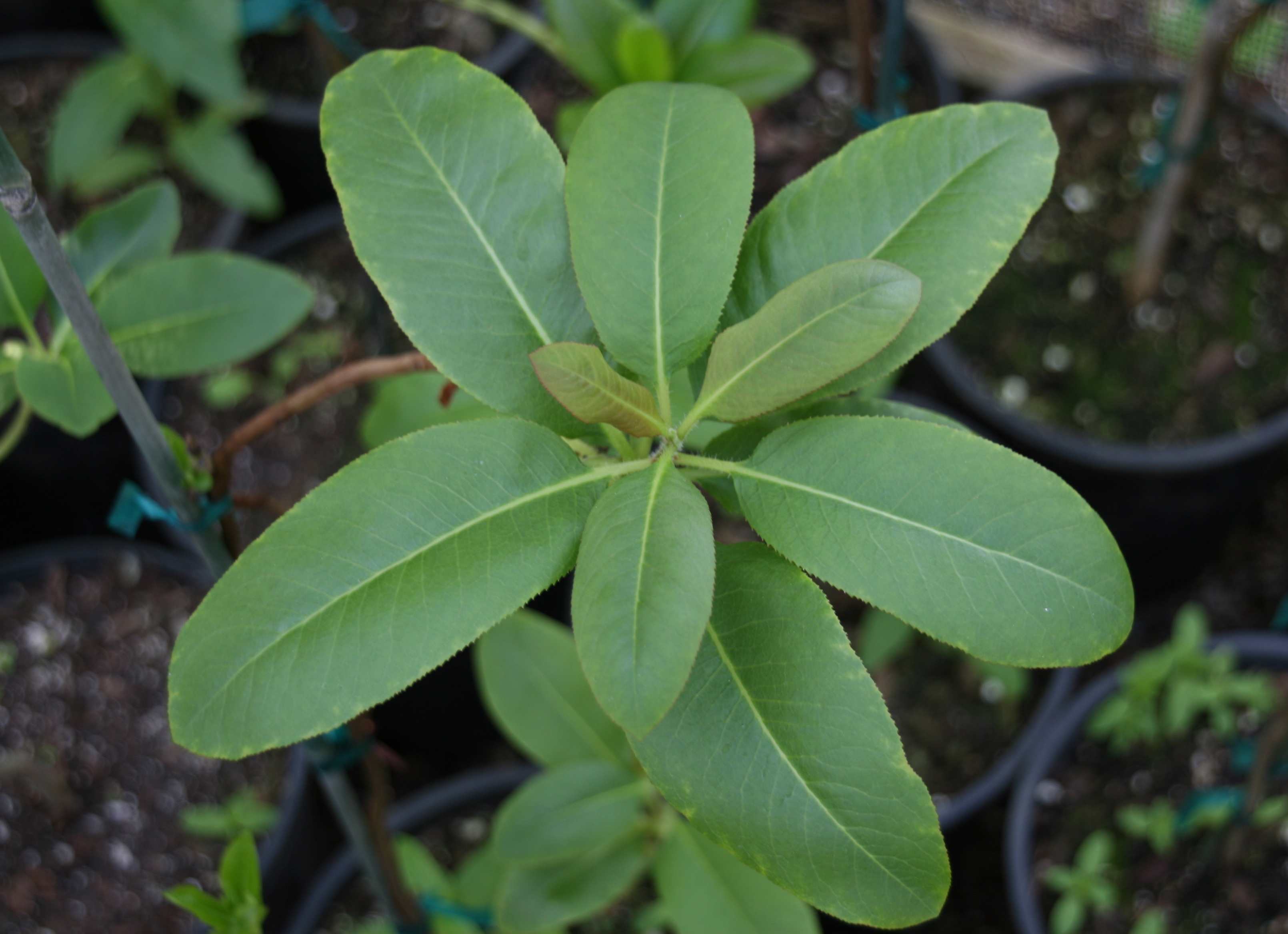
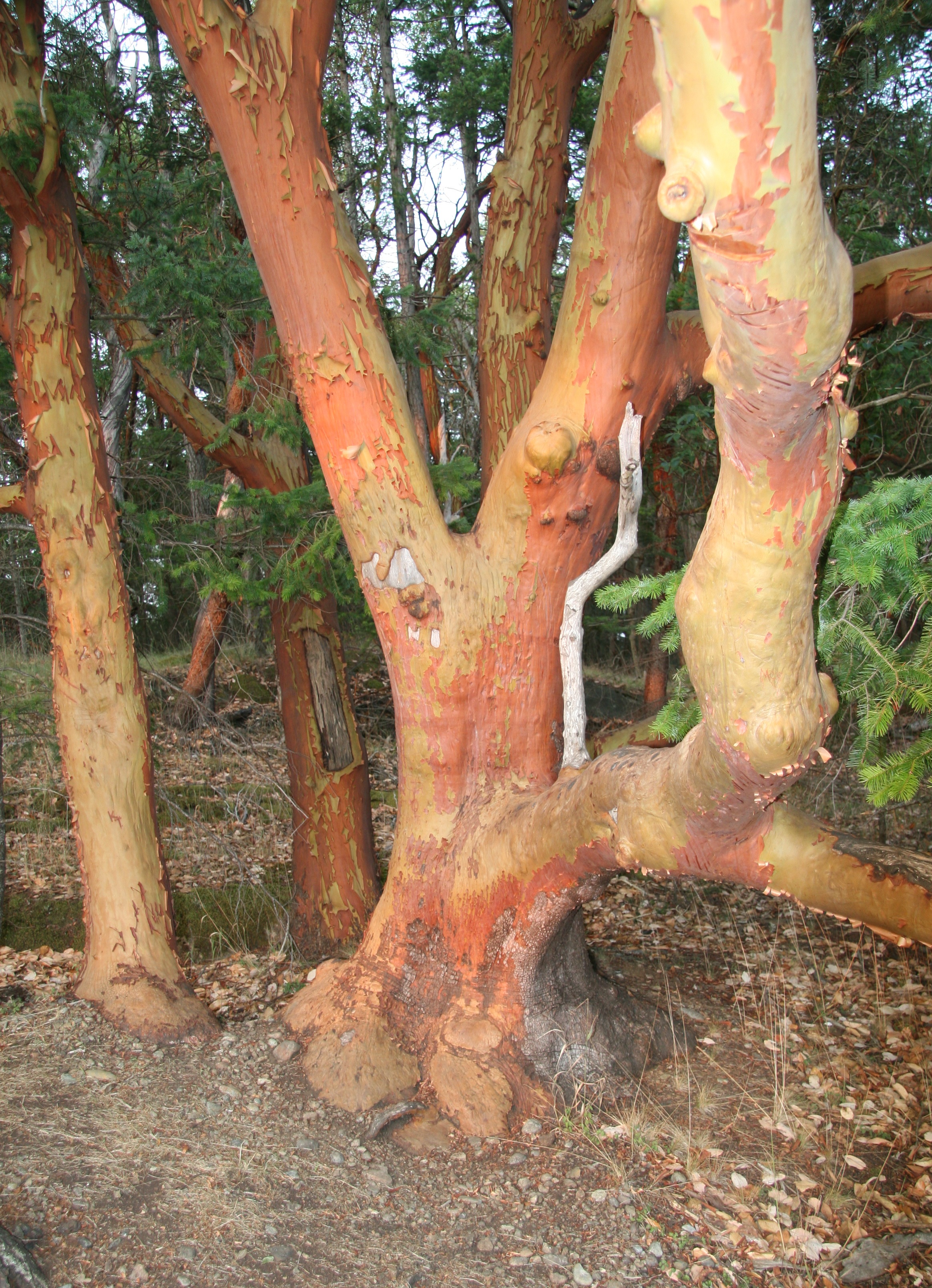
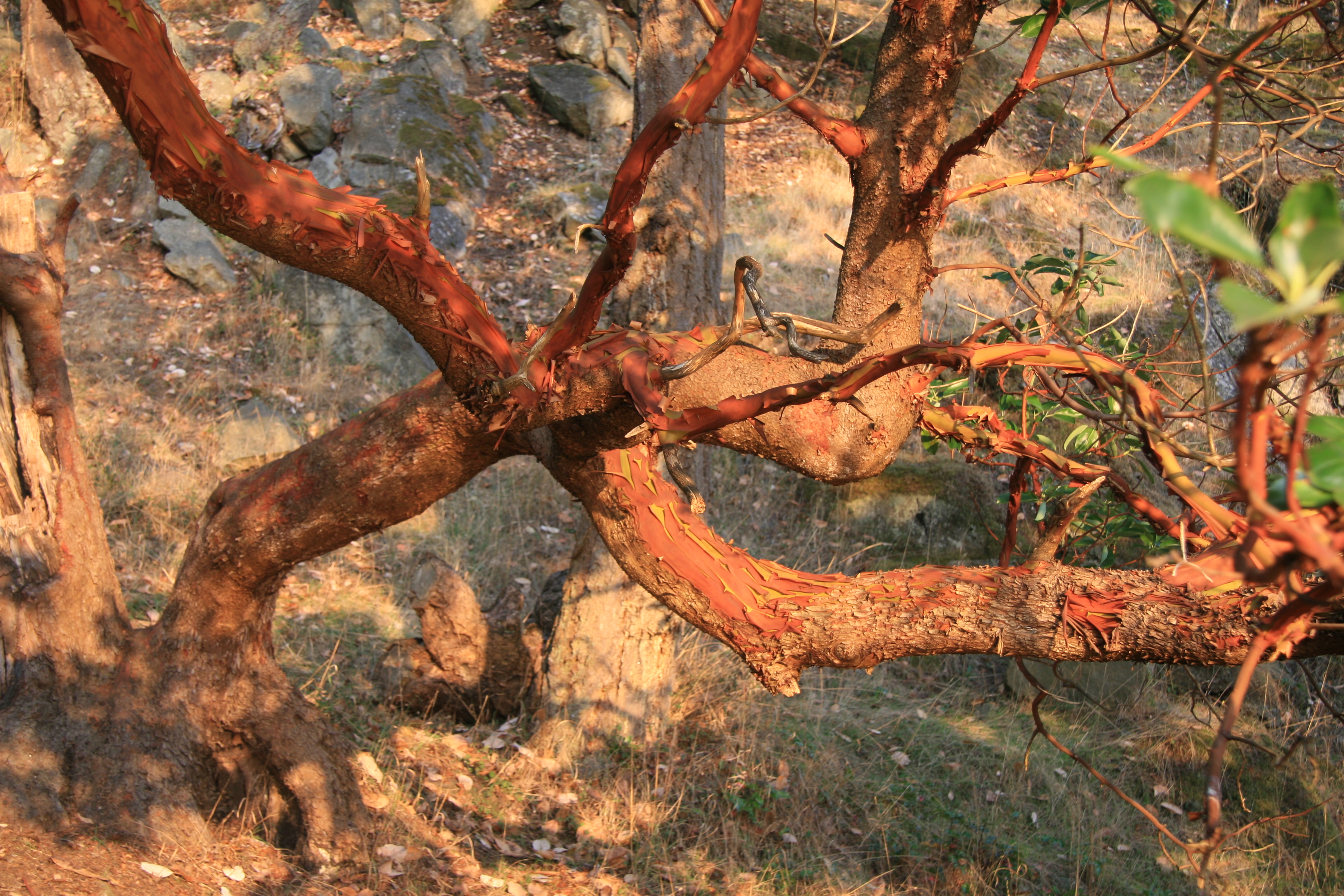
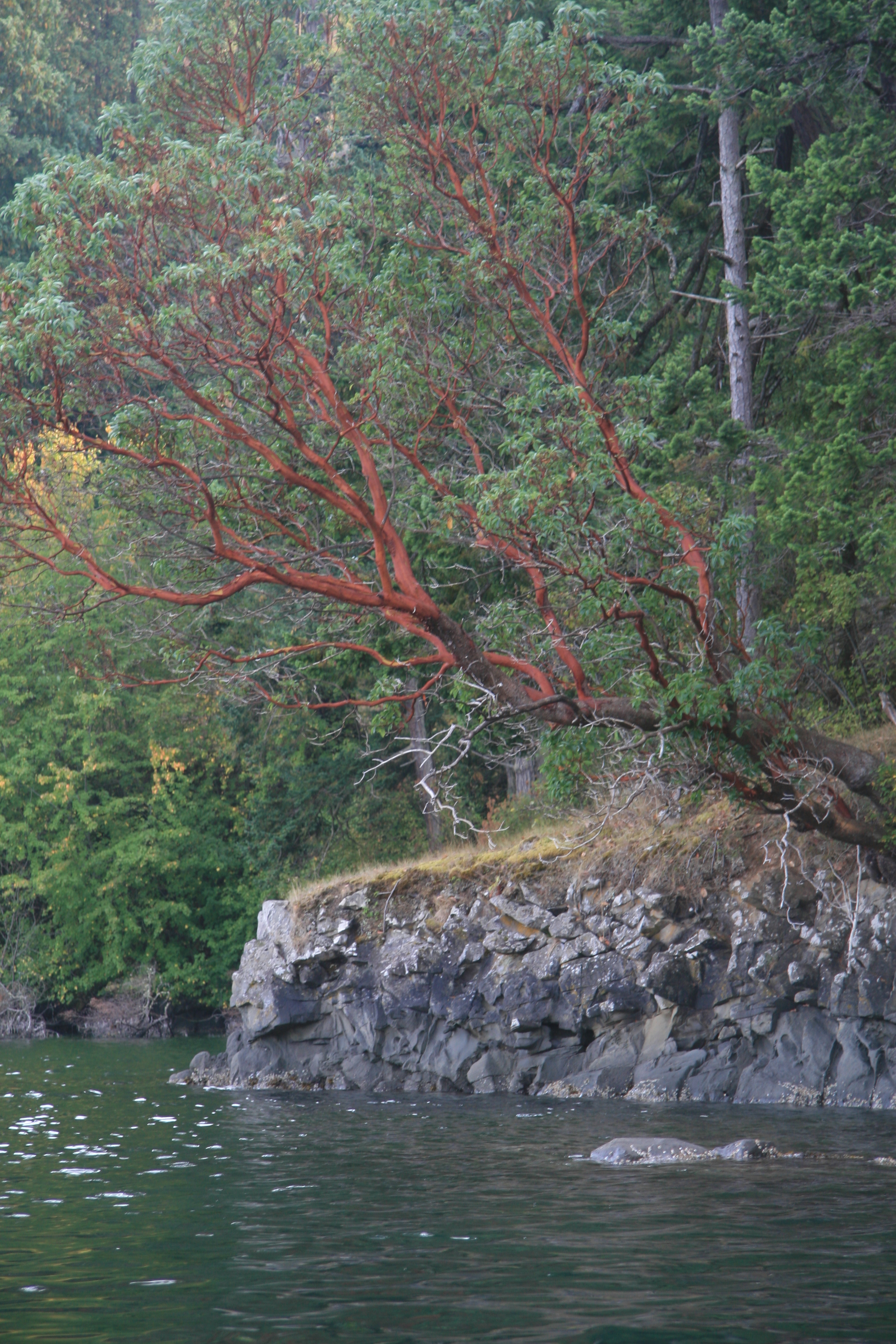
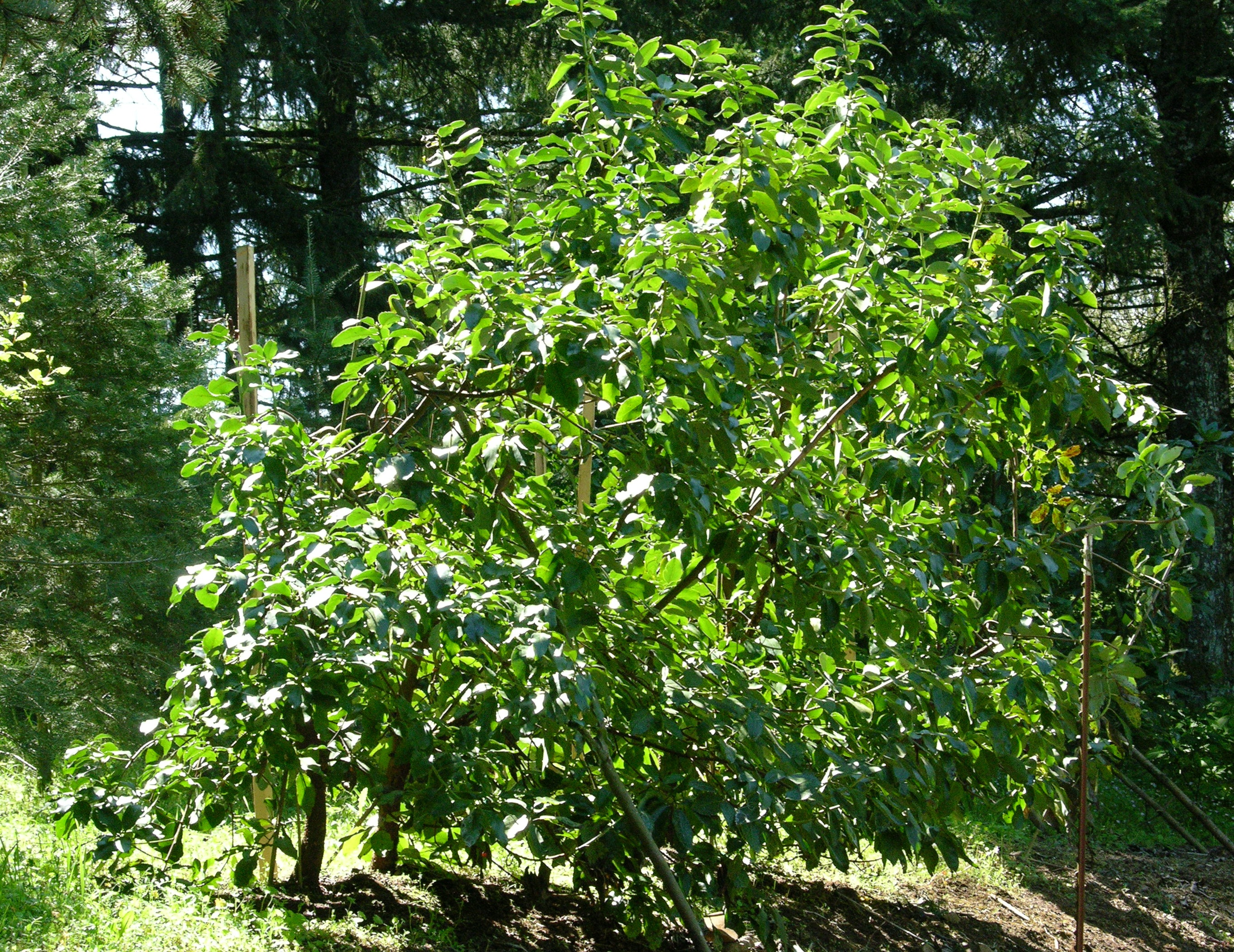
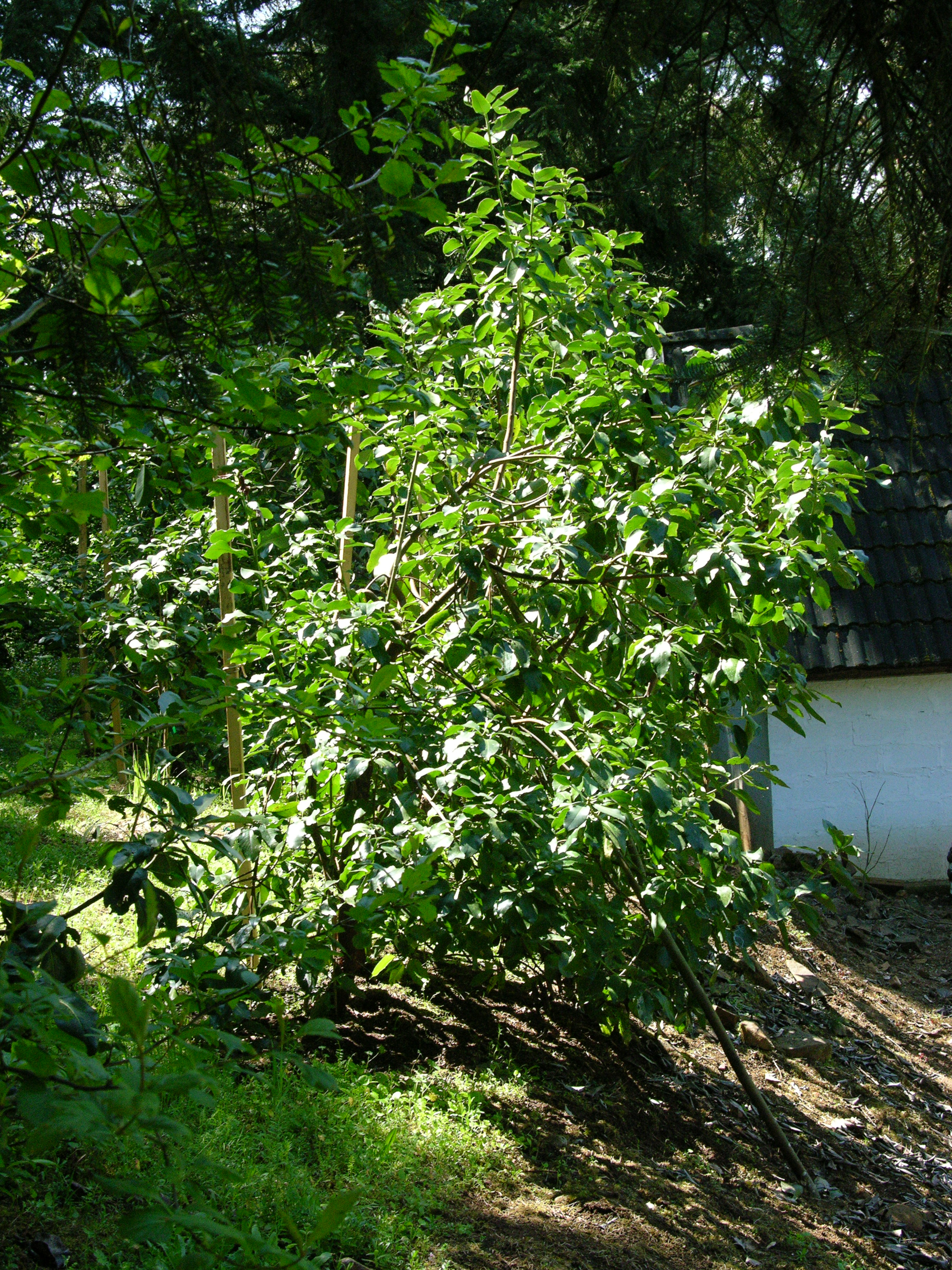
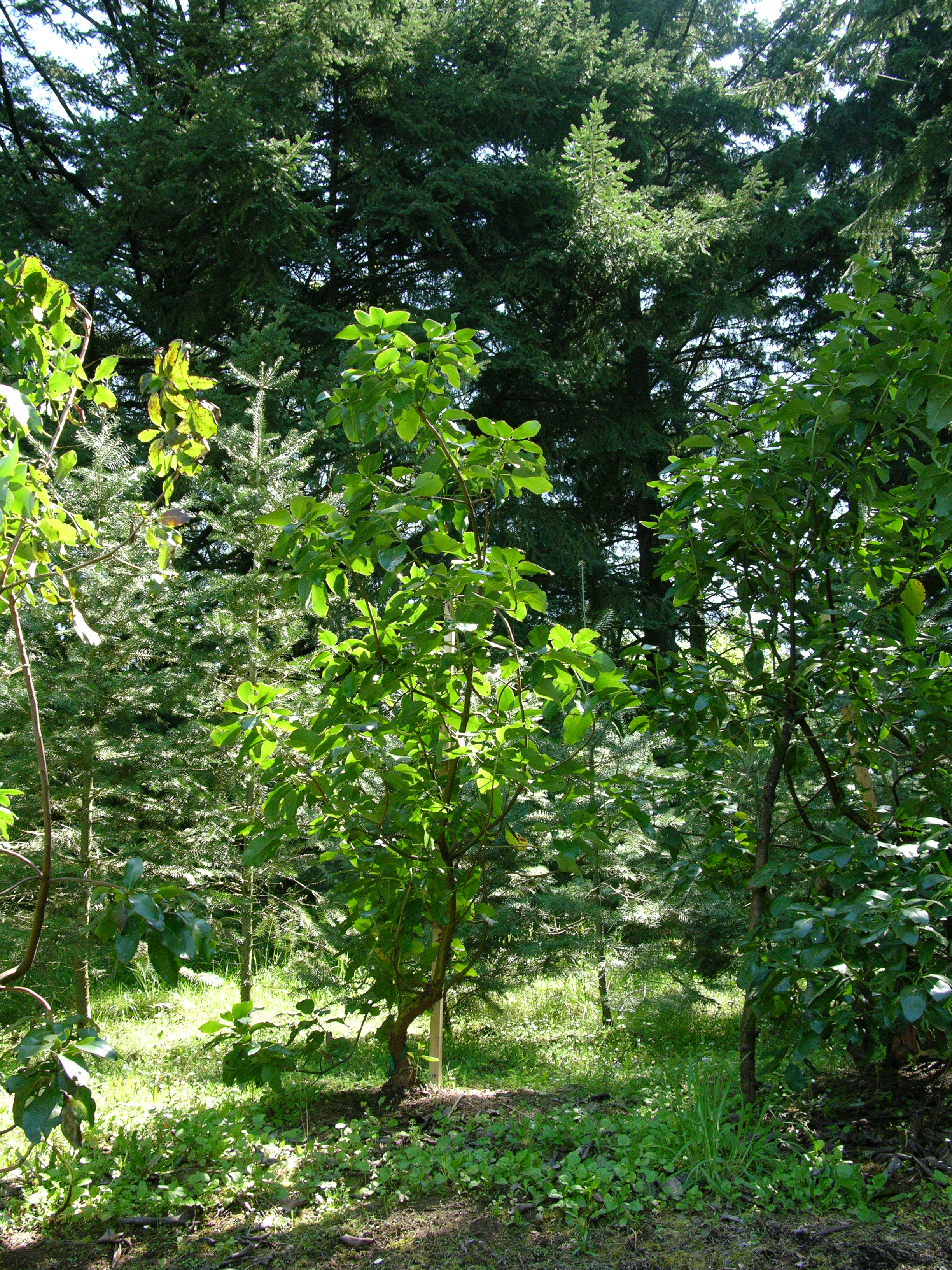
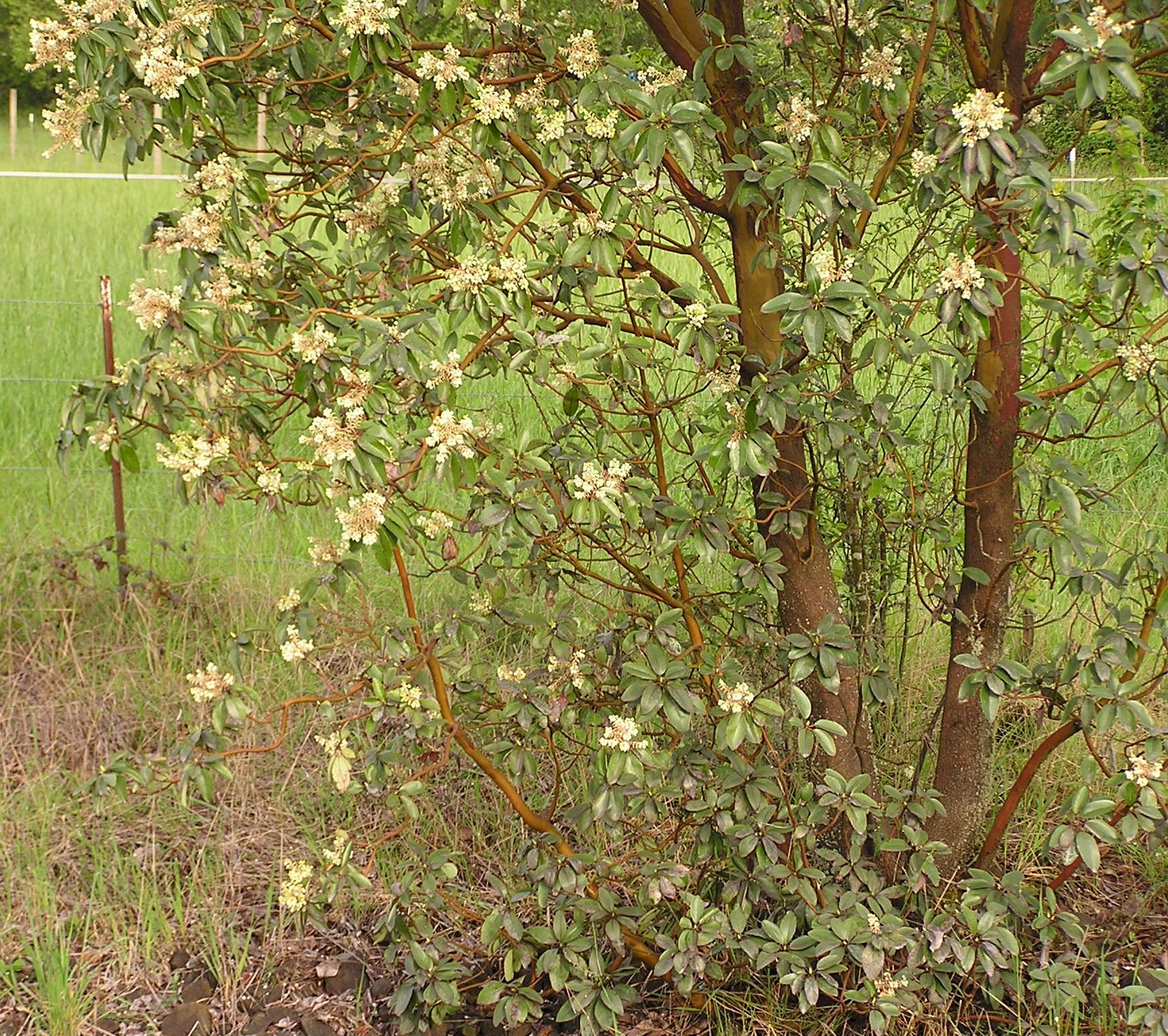
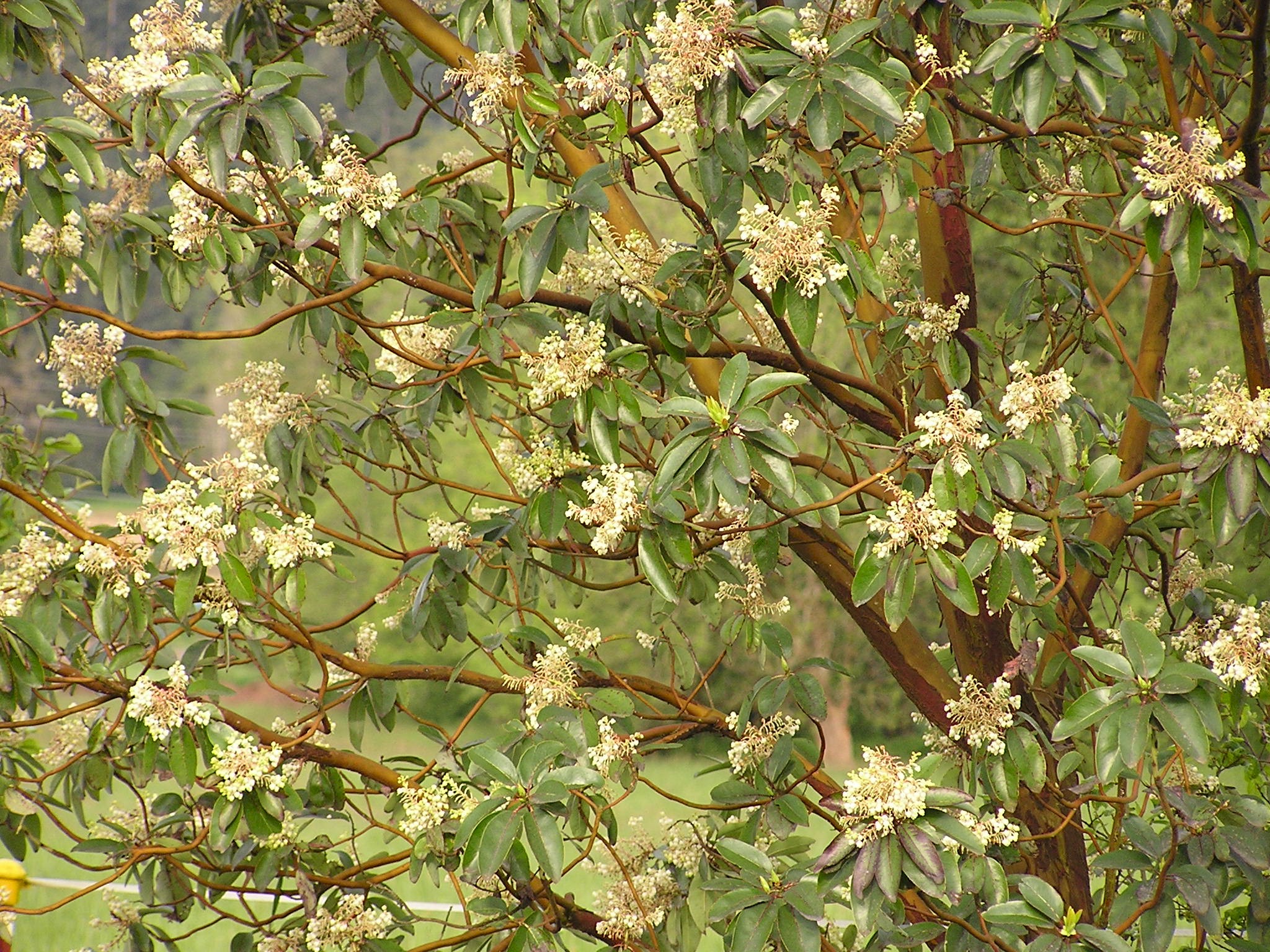
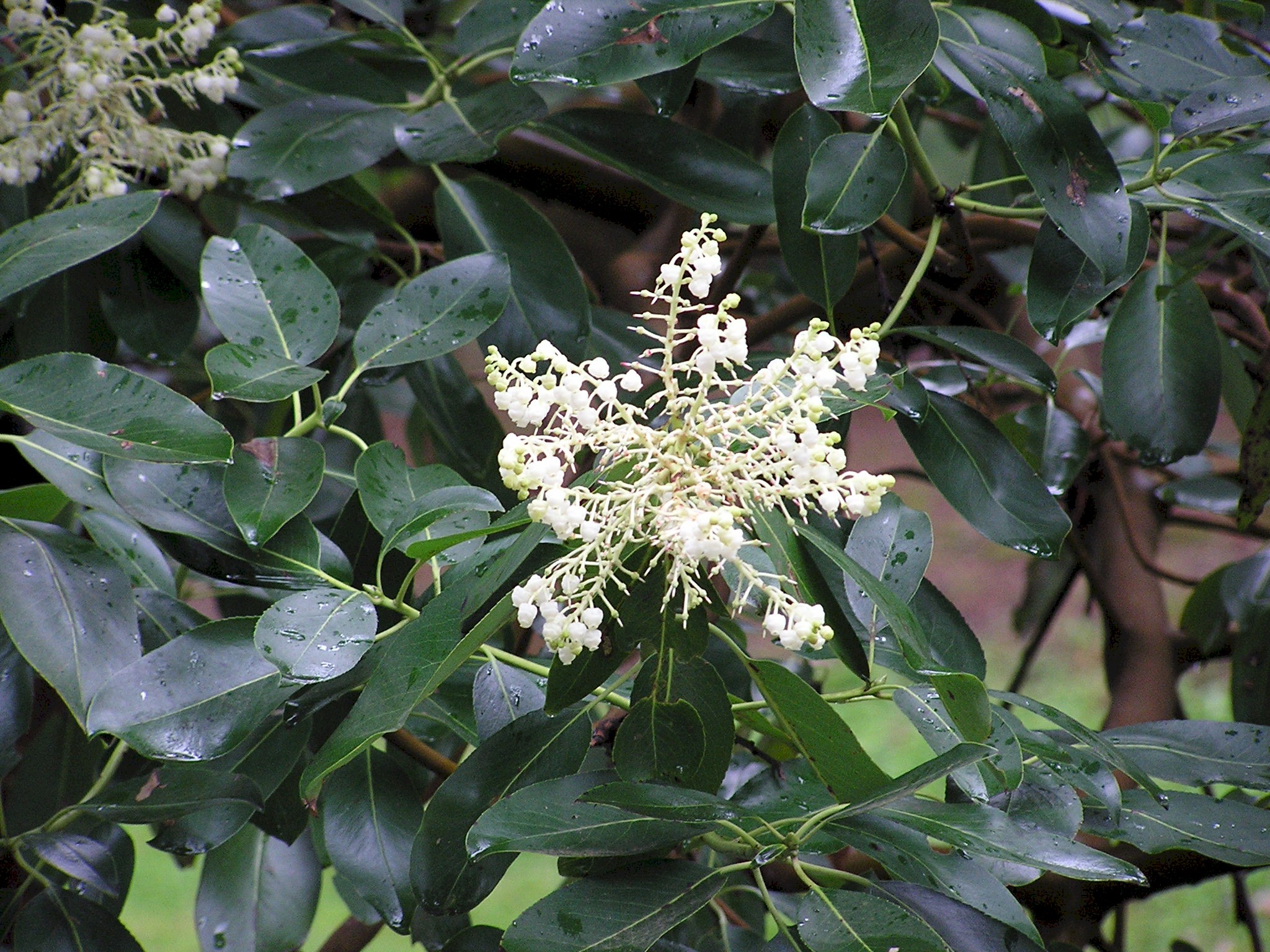
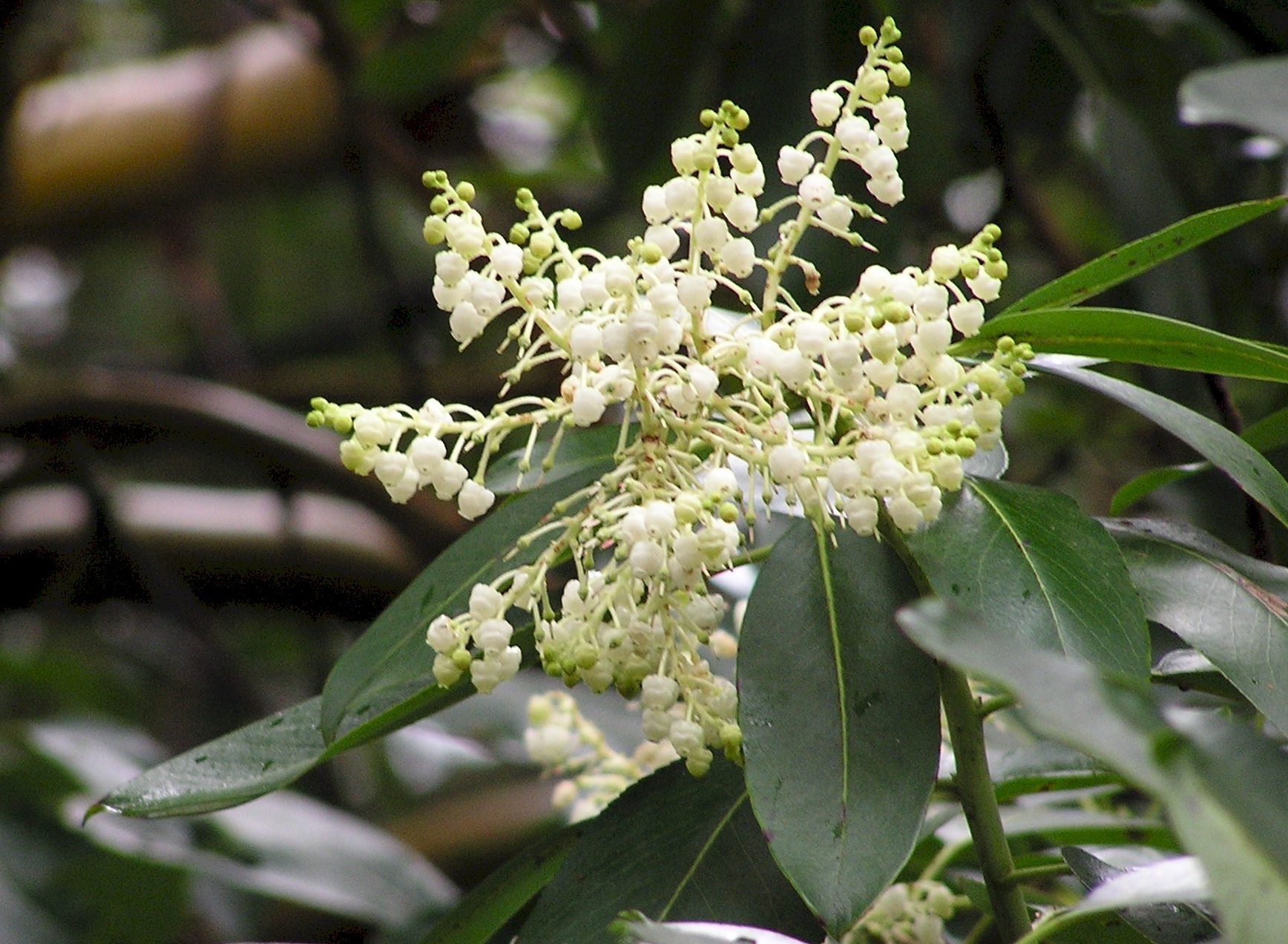
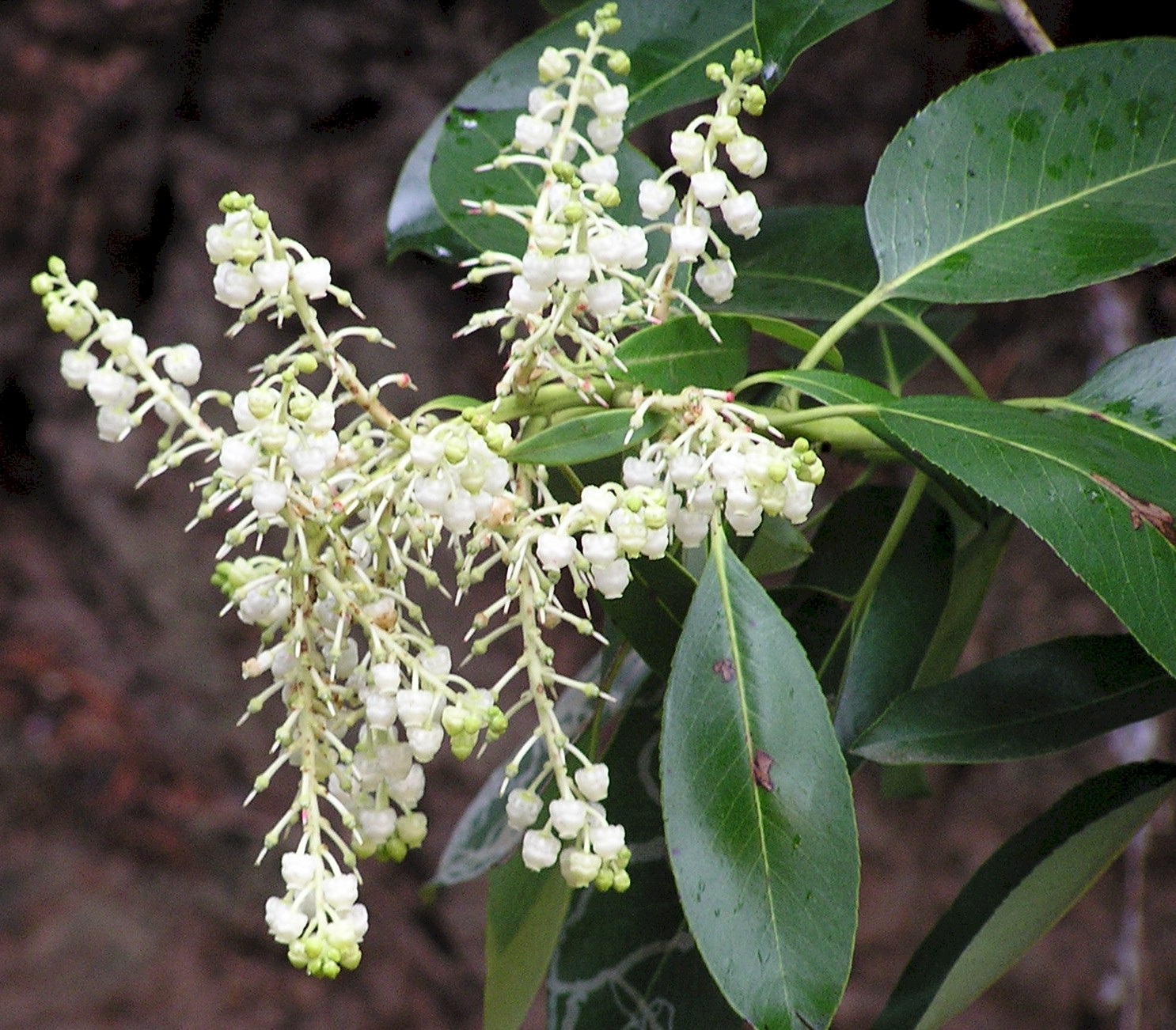
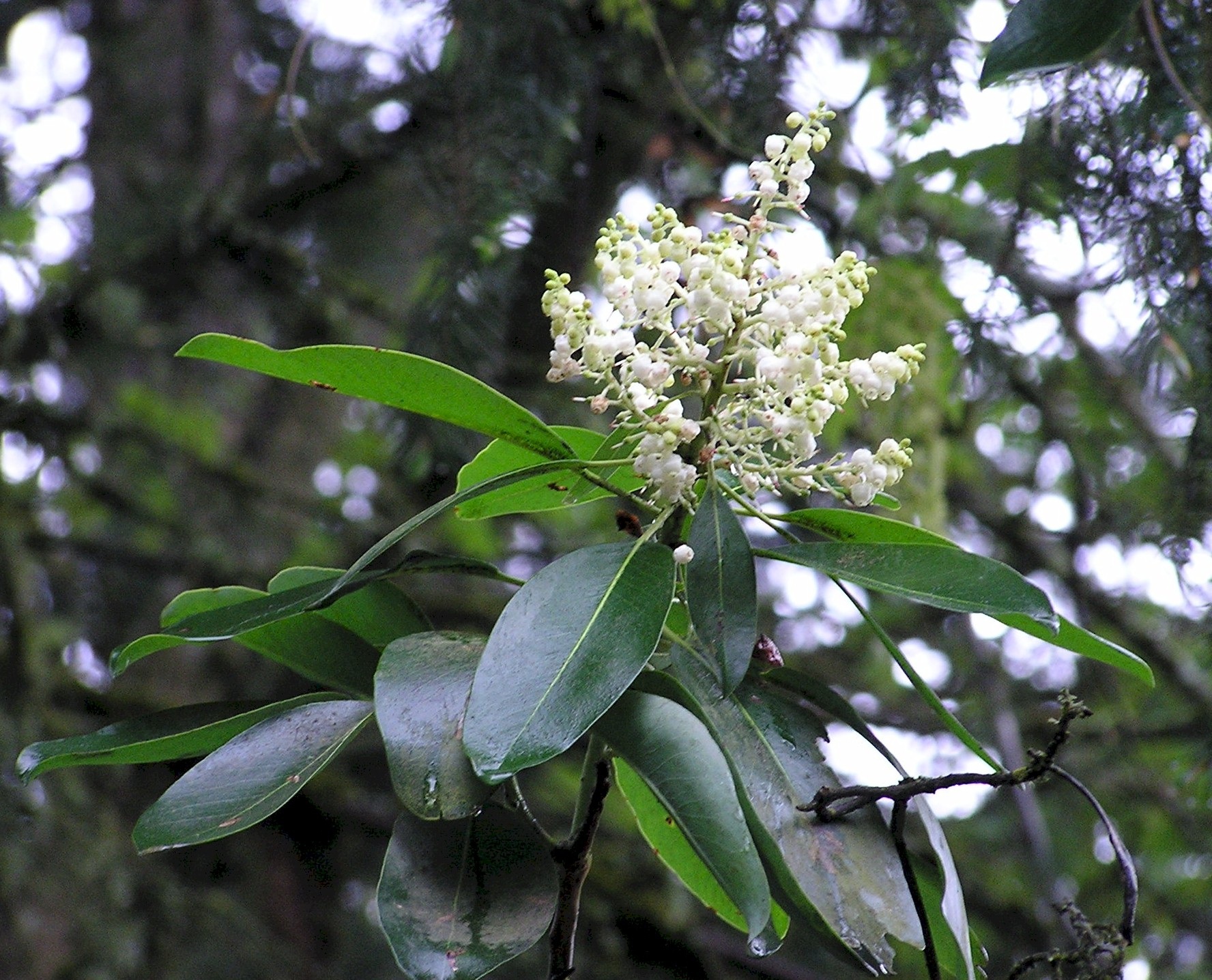
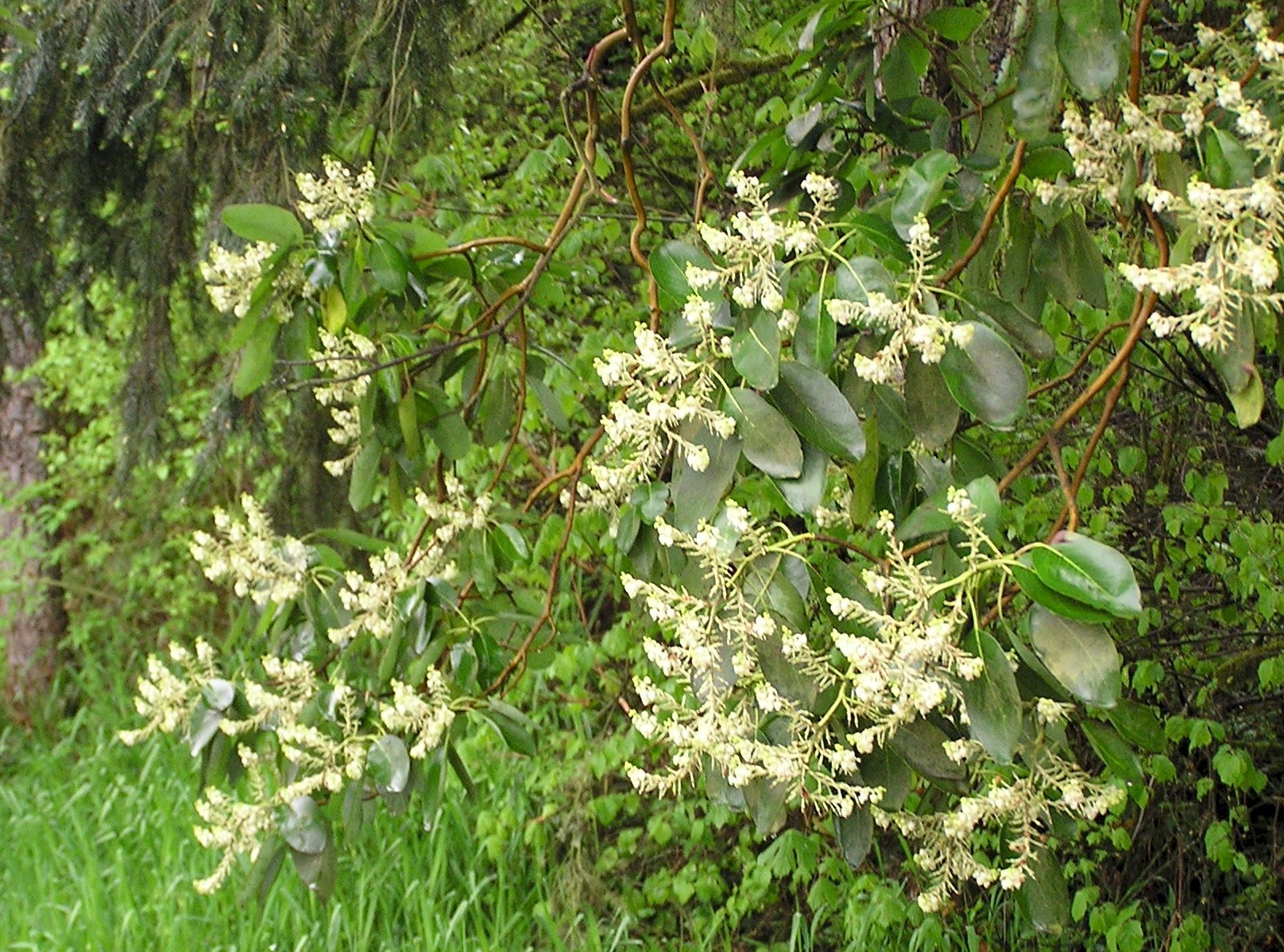
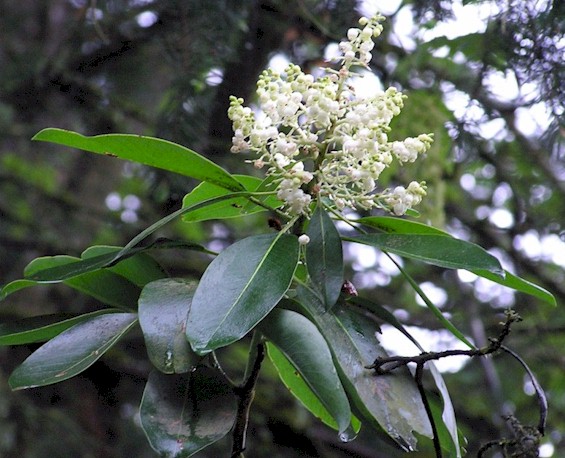
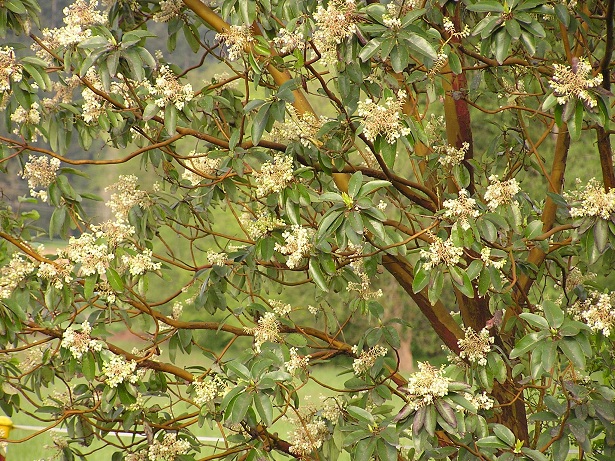
The Pacific Madrone (Arbutus menziesii) is such a beautiful tree. Glossy green leaves and clusters of creamy white blooms that give way to bright red fruits are all exquisite characteristics. But the most famous of the Madrone's features is the cinnamon brown/red bark. The trunk and branches of this Northwest Native evergreen are wrapped in bark of an extraordinary color that peels away in summer to reveal lighter tan underneath. Long favored by landscape artists, no two Madrone's are alike. Each trunk bends and twists in a style all it's own. Plant a group of three perhaps 2 feet apart--an excellent focal point in the landscape. Wally suggested using stakes during the early years to keep these contortionists from going 'too much' horizontal. A fine tip on growing Madrone from our favorite native plant grower! This handsome evergreen tree is a delight to birds year-round. The blooms are veritable honey-pots that attract hummingbirds by the score. |
|||||||||||||||||||||||||||||||
|
Leslie L. Haskin in his book, Wild Flowers of the Pacific Coast, writes:
Hardy, uncomplaining, drought-resistant, a thing of beauty all year round. Ah, but here's the rub. As happy as a Madrone can be when it is established, they cannot be transplanted! Ever! When you plant out, that is it! No future moving! And they are particular as to where they will grow. You must have good drainage. Many folks have tried growing Madrone on their own and many have failed. But with careful establishment you can have a Madrone in your own yard to enjoy through all the seasons. |
 |
||||||||||||||||||||||||||||||
|
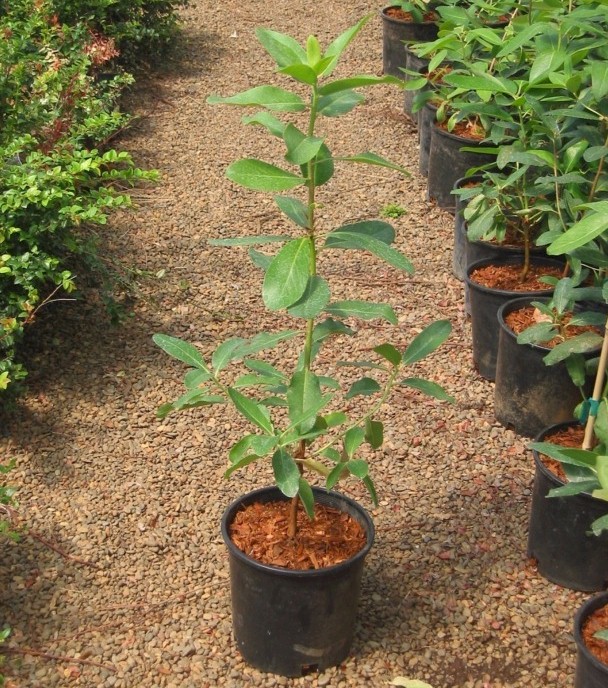
Madrone trees were an all-time favorite of Wally's as they are for many of us - the smooth reddish bark, the intricate shapes and the distinct character. We love the creamy flowers and the shiny dark evergreen leaves. The romance of Madrone is unlike any other tree. Madrono: Spanish for 'strawberry tree.' If you are interested in property value, here in the northwest a group of Madrone trees will significantly improve the value and sale-ability of your property! Madrone add a touch of the northwest - a touch of Grace and Elegance. If you are planting one of these beauties in your garden, you must provide a well-drained spot to prevent root rot! A little shade is appreciated but not required by the Madrone. Besides visual impact, this tree will add more value to your property than any other native. Though this is not the easiest tree to grow, start with a healthy and vigorous plant and be conscientious in planting. Poor, even rocky soil is fine, especially a bit on the acid side. Stake your young tree with plastic ties to give it a little extra support until it's well rooted. Some leaves will die in January - February but most will remain and soon new buds appear! As with all plants, keep your Madrone well groomed. Remove any sick leaves or branches with sanitized cutters. |
|||||||||||||||||||||||||||||||
|
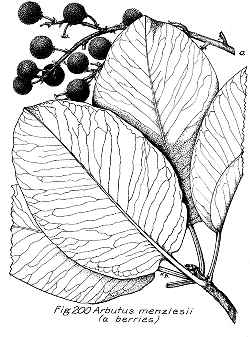
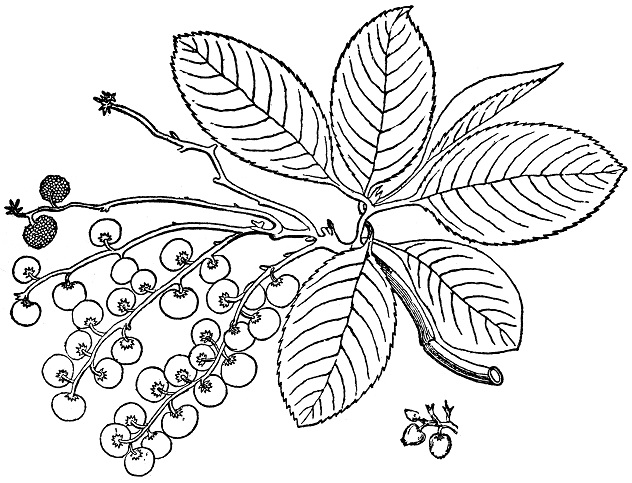
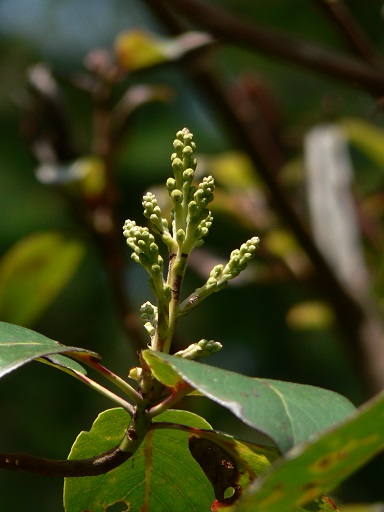
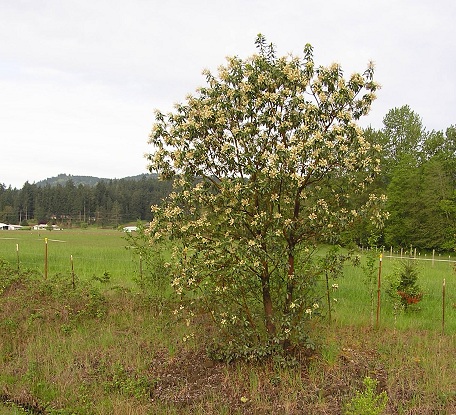
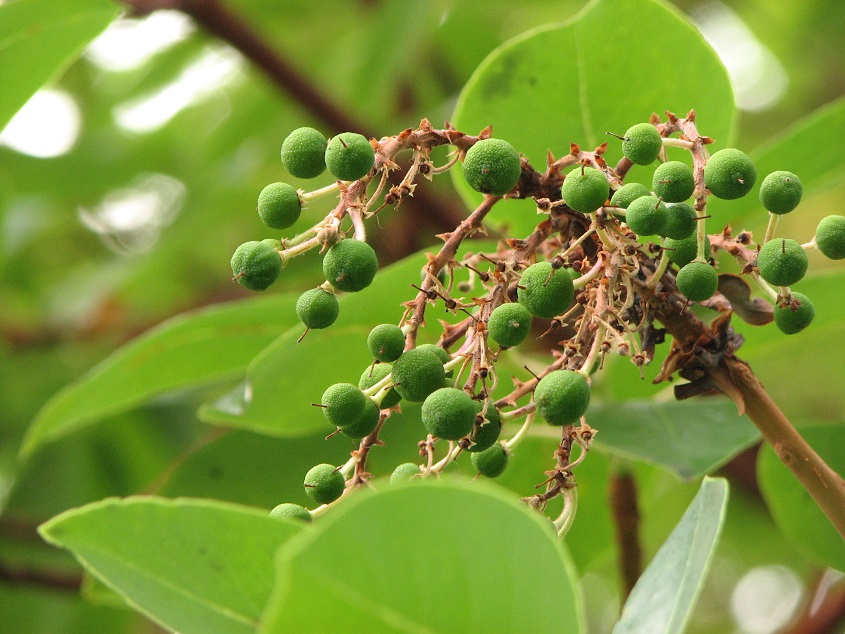
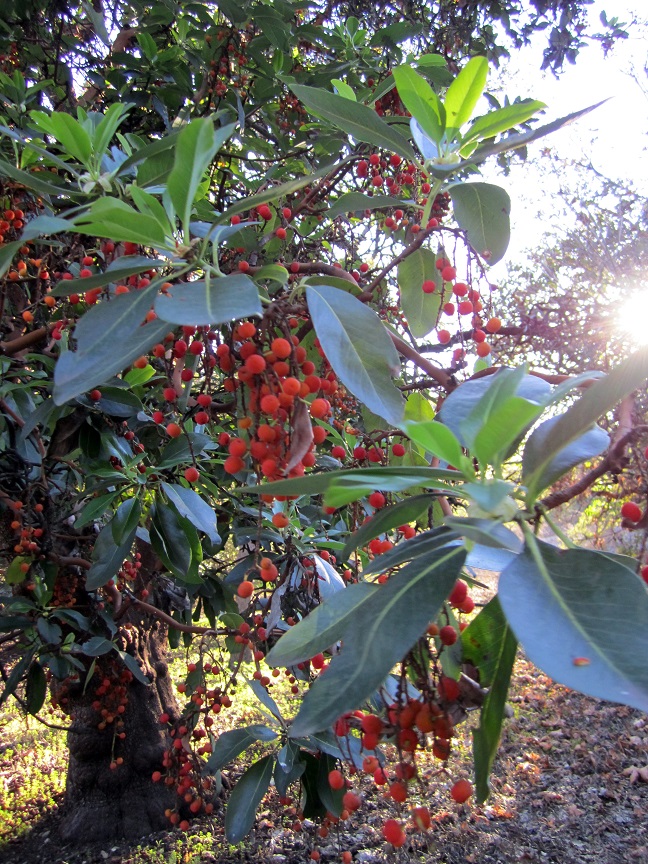
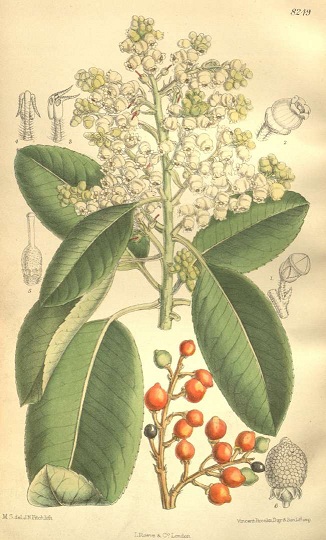
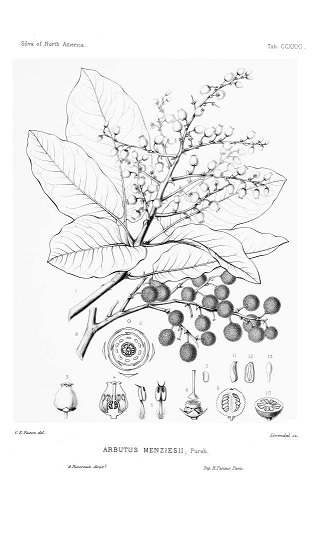
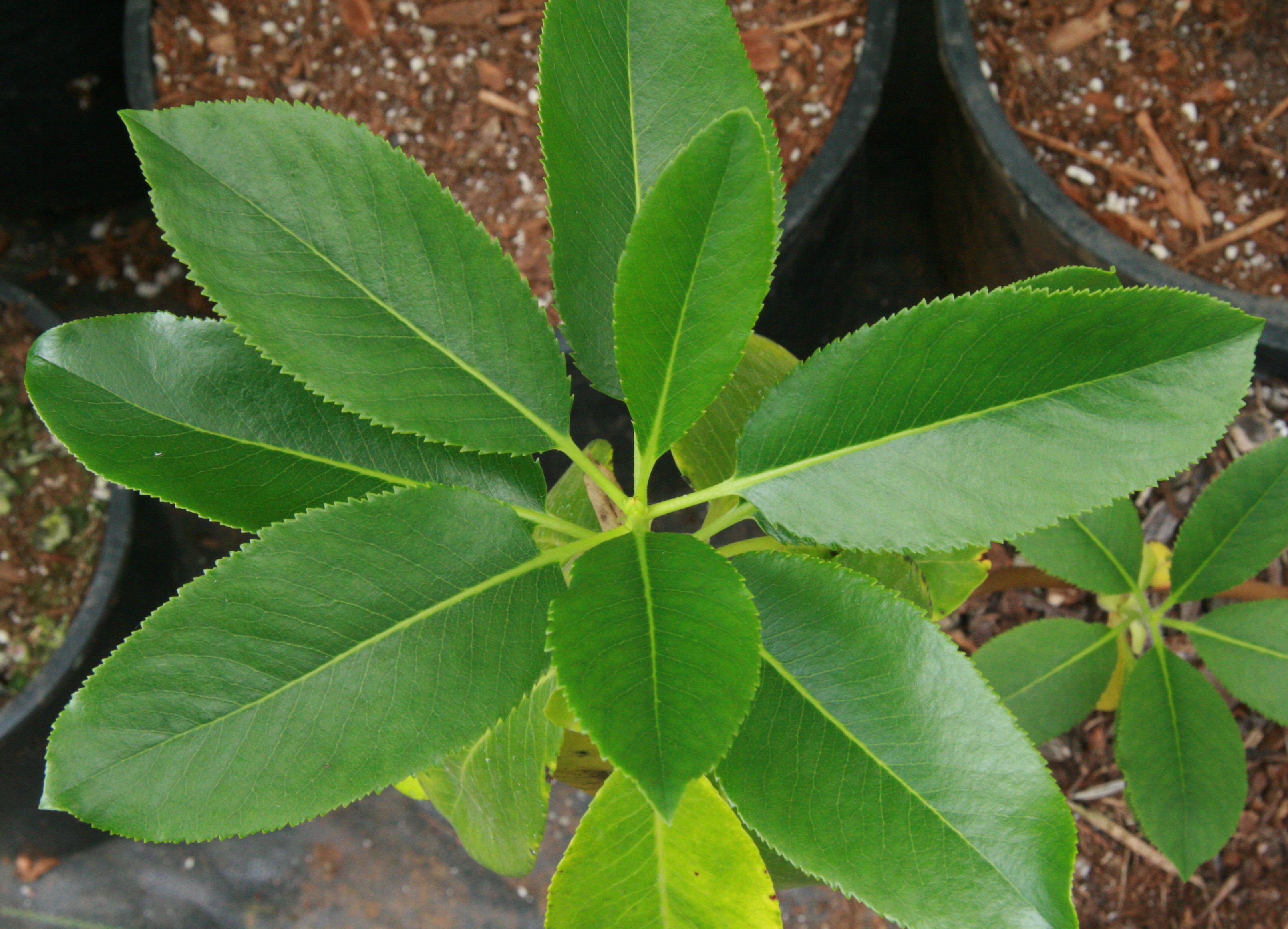
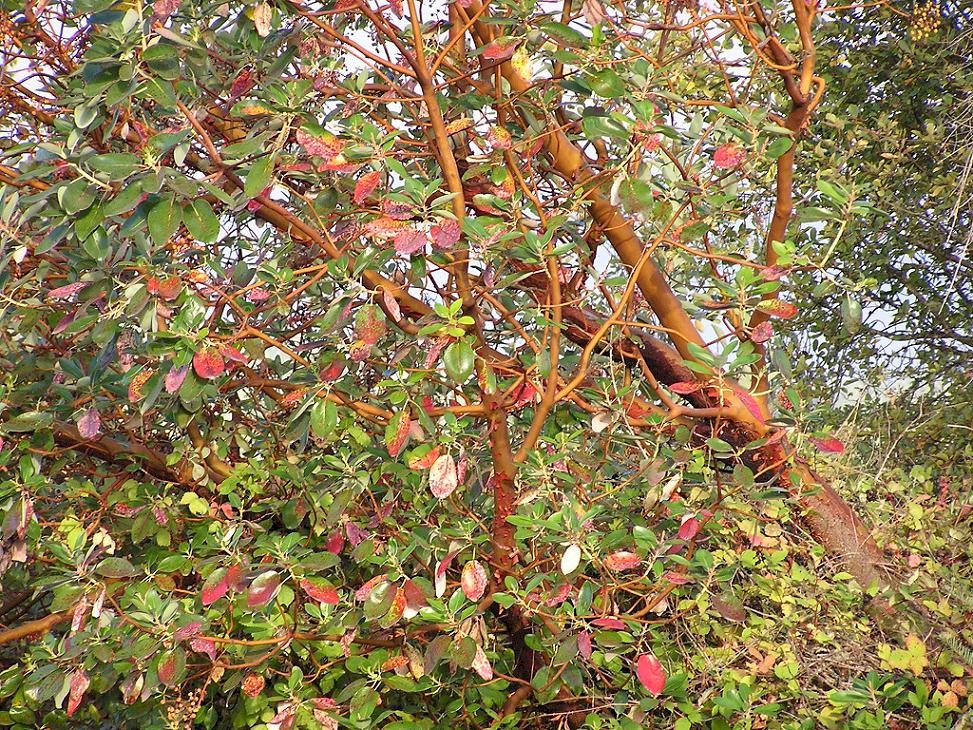
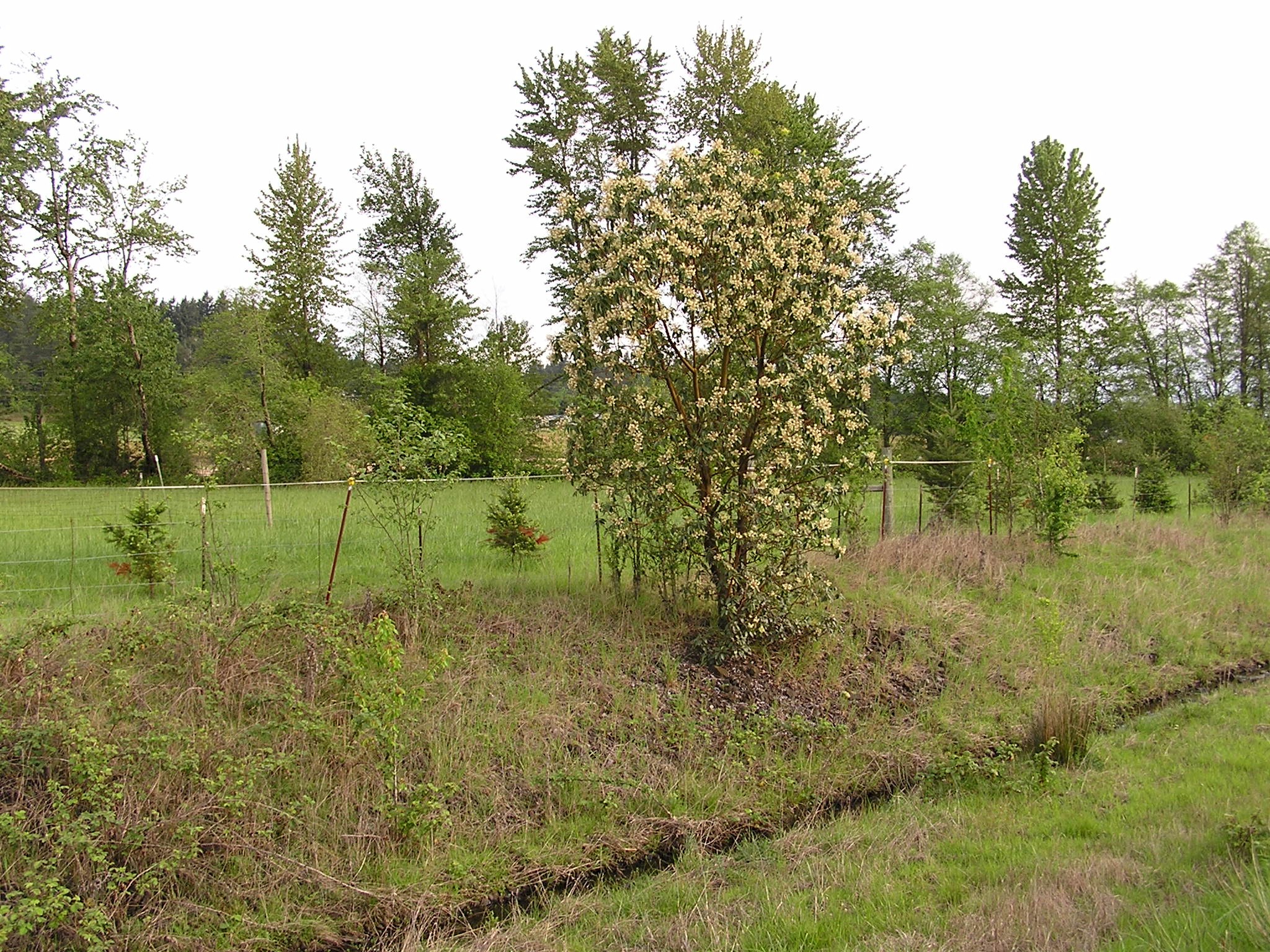
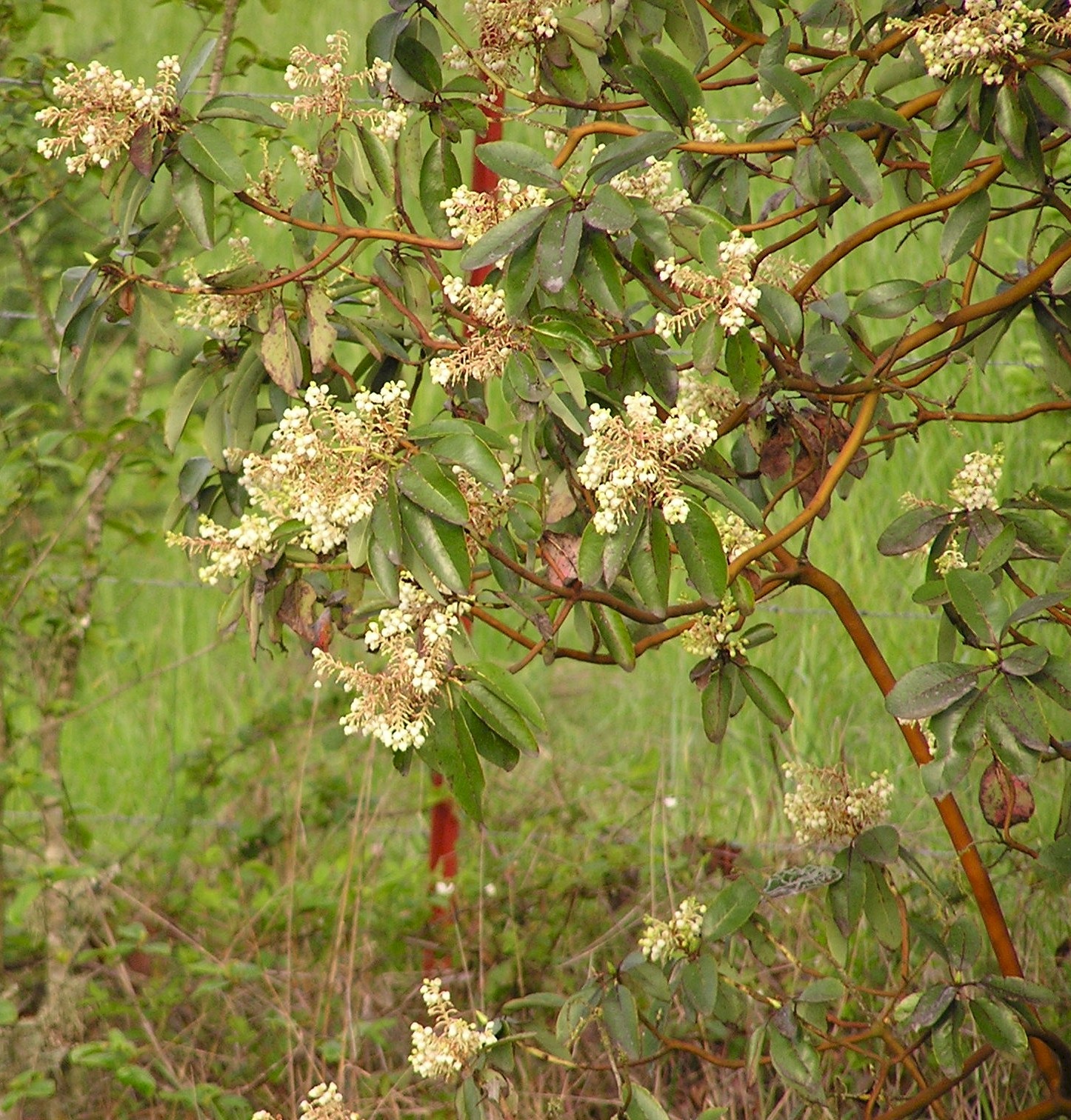
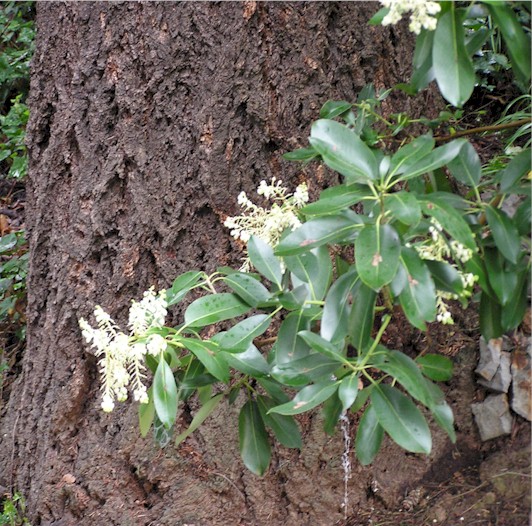
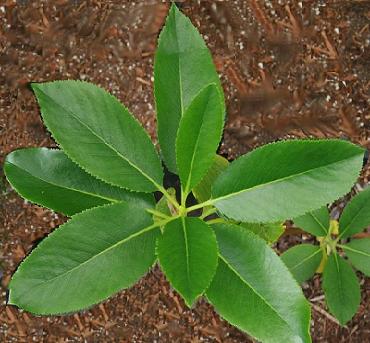
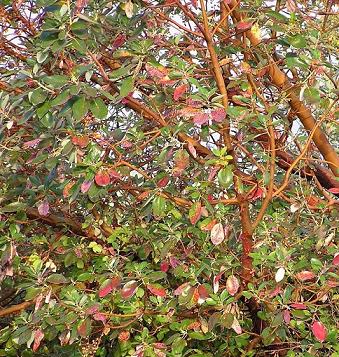
(A Nonsense Note from Wally: Remember Henry Higgins in "My Fair Lady" (Shaw's Pygmalion)? He could tell what part of London someone was from by the accent. A similar scene applies here: If you call this plant "Madrona," I know you were raised in northern Washington State. If you call it "Madrone", you were raised in Oregon or California. If you say "Arbutus," you are probably Canadian.) Plant Brief: A beautiful, elegant broad-leaved evergreen, 30 - 70 ft, Pacific Madrone is famous for it's smooth, reddish brown trunk, it's large evergreen leaves and small red berries. This native tree often grows on dry bluffs and poor soil, and the trunk often bends at graceful angles. It is superb as a single tree or in drifts. Madrone does best in a south or west exposure, well drained. Do not over-water or fertilize. Salal (Gaultheria shallon) does nicely below Madrone. Constantly changing, Arbutus menziesii sheds bark, berries and leaves. This northwest native tree is nearly impossible to survive when dug in the wild. A must for every garden. Description: Beginning in March through June, we see why this particular specimen, Arbutus menziesii, is so valued in the landscape. The red, smooth bark in combination with the dark green of the leaves and the whiteness of the blossom is absolutely stunning. As the flowers are spent, red and orange and yellow fruit, usually in the same cluster, appear and by autumn are mature. Other times of the year we are rewarded with a completely different show. In June or July, we see new leaves emerging in a vivid green as the old leaves turn a rich red and gradually fall. These leaves are a wonder in themselves. They are shiny and very green on top, much paler on the underside, hairy when young. |
 |
||||||||||||||||||||||||||||||
|
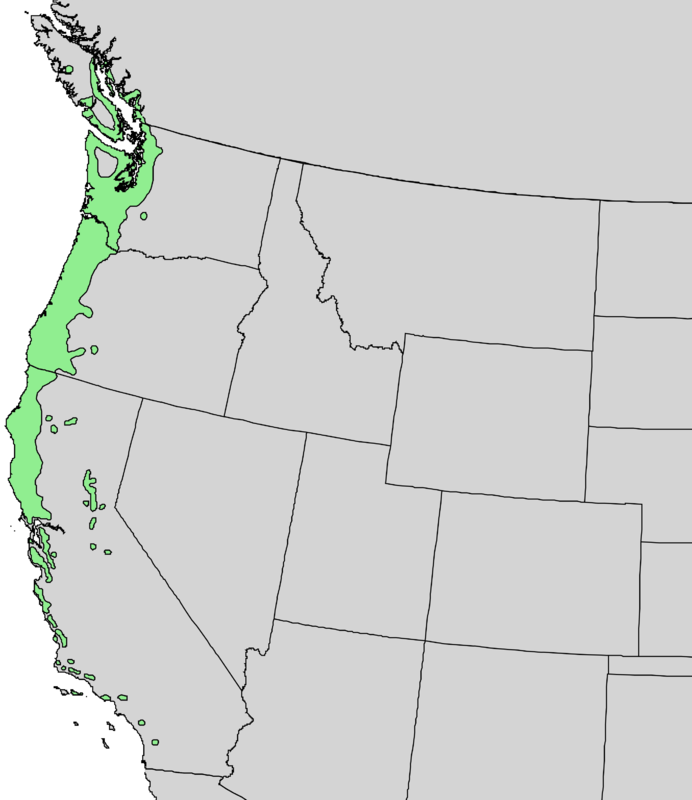
The bark of the Madrone has it's own palette, beginning as deep orange when young. As the tree matures, the bark becomes darker and darker red until it phases into grey. At that point the trunk begins to scale creating a completely different texture than the smooth young tree. Scientific classification: The genus Arbutus, belongs to the family Ericaceae. The Madrona Tree is classified as Arbutus menziesii and the Strawberry Tree as Arbutus unedo. The Trailing Arbutus known as Ground Laurel or Mayflower is classified as Epigaea repens. Habitat and Geographic Range: From Vancouver Island, British Columbia, south through the lowlands of the Cascades, sometimes found in the Sierra Nevada, through San Diego County and the southern California coastal mountains and finally to it's most southern growth area of Santa Cruz Island, the Pacific Madrone is always distinctive wherever it places it's roots. It's elevation choices are from sea level to 6,000 feet. The environments where we find this beauty range from areas with average rainfall as much as 150 inches yearly to as little as 15 inches a year. As particular as it can be to establish, once it settles down to grow it will withstand high temperatures and drought to wet freezing conditions. Although it prefers some sun, it seems not to mind some partial shade. |
|||||||||||||||||||||||||||||||
|
It often strikes a fellowship with oak or conifers as long as the forest does not smother it by standing too near. Neighbors known to live amicably with the Pacific Madrone are Oregon White Oak (Quercus garryana var. garryana), Canyon Live Oak (Quercus chrysolepis), Shrub Tan Oak (Lithocarpus densiflorus), Golden Chinkapin (Chrysolepis chrysophylla var. chrysophylla), Bush Chinquapin (Chrysolepis sempervirens), California Black Oak (Quercus kelloggii), California Laurel (Umbellularia californica), White Fir (Abies concolor), Douglas Fir (Pseudotsuga menziesii var. menziesii), Coast Redwood (Sequoia sempervirens) or Ponderosa Pine (Pinus ponderosa). In fact, this unique tree often becomes the nursemaid to young Douglas Fir seedlings. Use of Plant: Native Americans ate the fruits of the Madrone uncooked. The wood is quite dense, making it difficult to work except by the skillful carpenter. Mexican caberellos were known to make their spurs from this wood because of the hardness and the beautiful color. Propagation: Nearly impossible to survive when dug in the wild. Culture: Superb as a single tree or in drifts. Does best in a south or west exposure, well drained. Do not over-water or fertilize. Salal (Gaultheria shallon) does nicely below Madrone. A must for every garden. Mainly disease resistant, the Madrone is sometimes afflicted with root rot, fungi or soot cankers. Historical and Special Interest: A curious natural deer repellant is produced during the time when the leaves are young and attractive to our forest friends. A liquid containing reduced sugars is secreted just at the tip of the leaf bud which attracts ants and flies. The presence of these insects renders those succulent leaves unpalatable to deer. In 1769, Father Juan Crespi, the journalist of the overland Portola expedition, noted a tree that resembled the Mediterranean Strawberry Tree, Arbutus unedo. He named this new tree Arbutus menziesii. Today we call this tree Madrone. It looks like it belongs to a warmer climate than the Pacific northwest, but it is truly native to our region. |
 |
||||||||||||||||||||||||||||||
|
|||||||||||||||||||||||||||||||
|
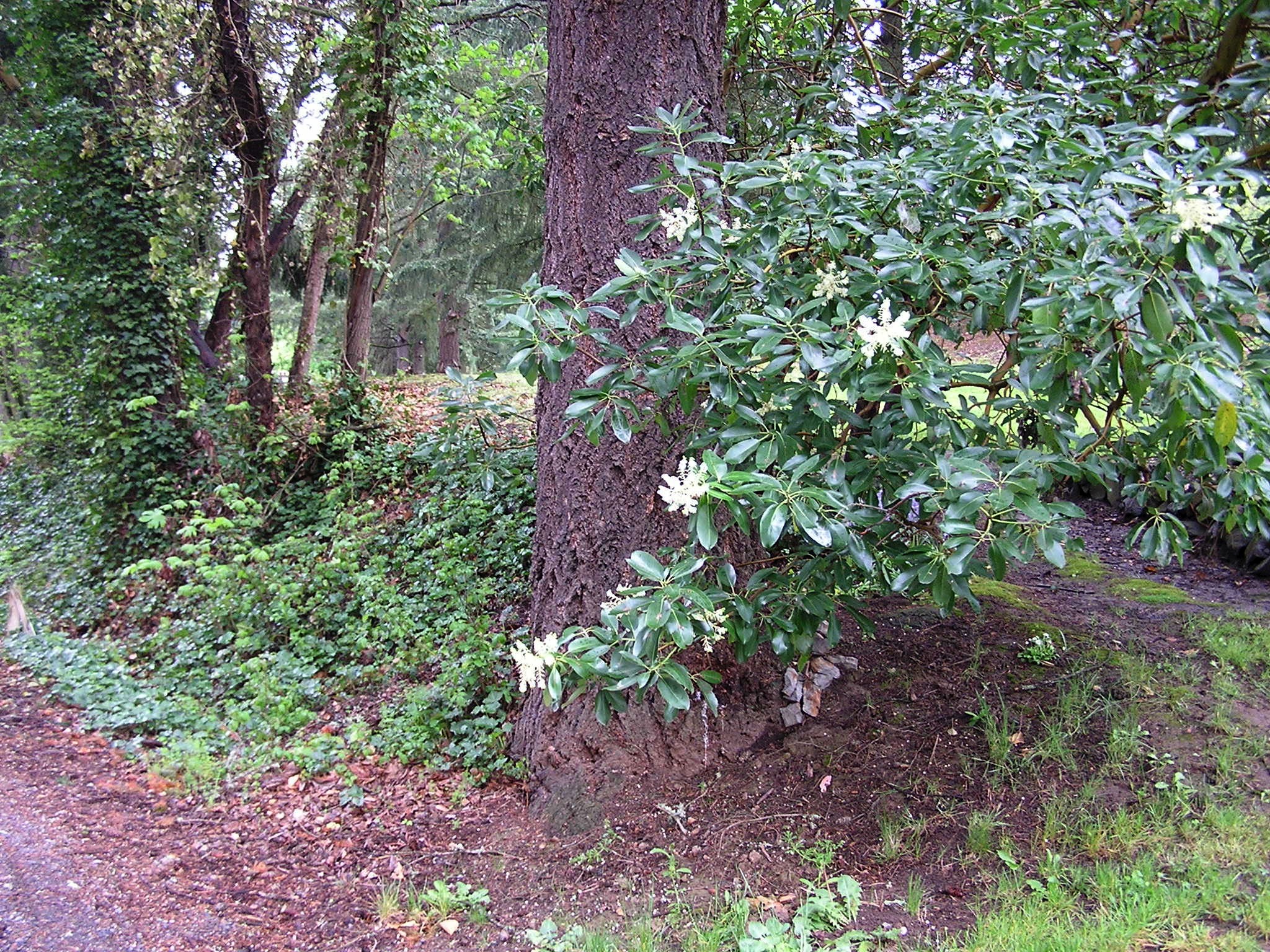
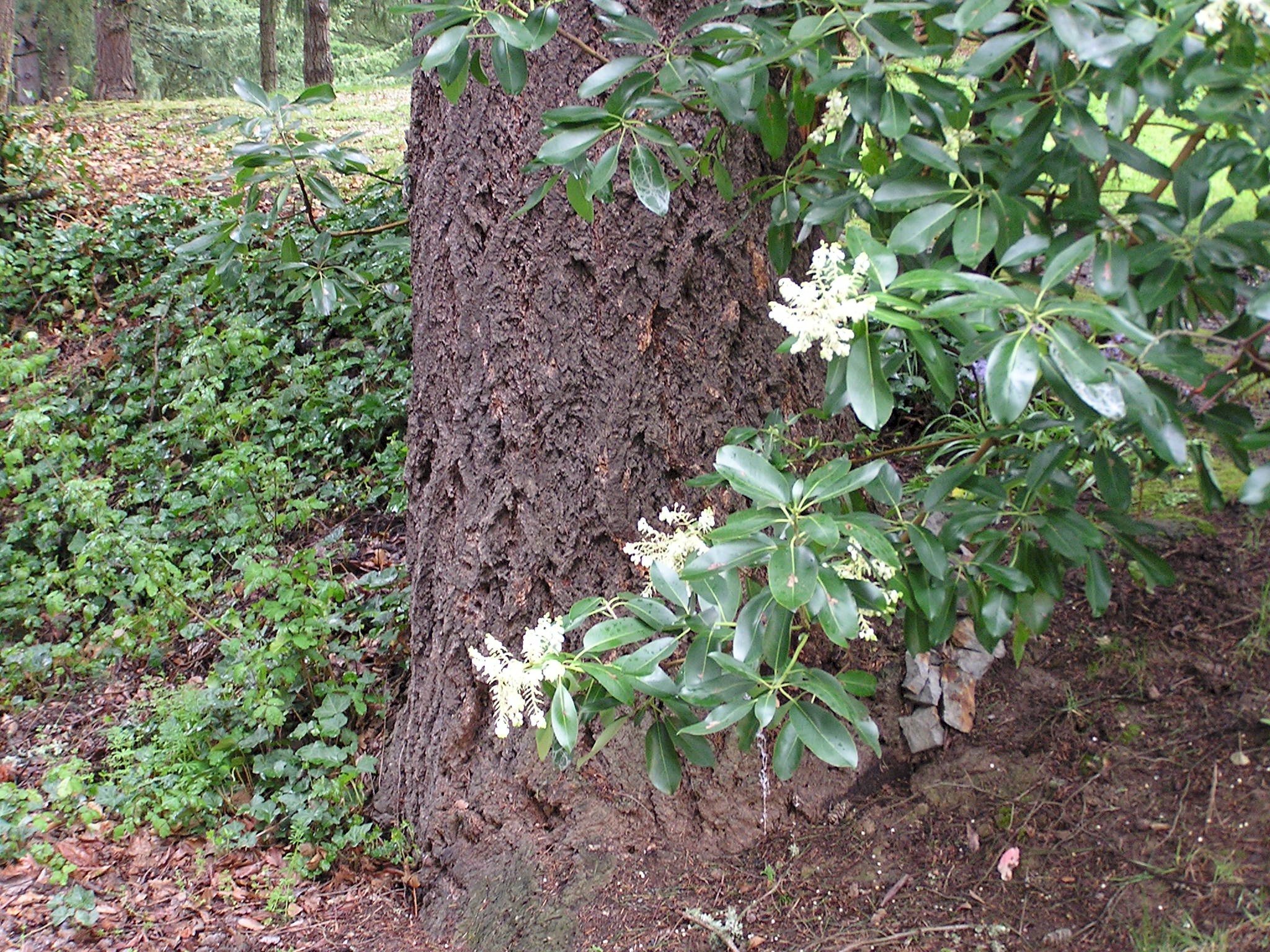
Photos, above, credit: Walter Siegmund |
|||||||||||||||||||||||||||||||
|
Photo, left, credit: mindgrow, Big Basin; Photo, center, credit: Mlouns; Photo, right, credit: Walter Siegmund |
|||||||||||||||||||||||||||||||
|
Photo, center, credit: Jina Lee, "Green pea like berry growth on tree branch" |
|||||||||||||||||||||||||||||||
|
Photo, left, credit: Seglea; Photo, right, credit: Professor Wilbur Bluhm |
|||||||||||||||||||||||||||||||
|
Photo, left, credit: BriWeldon; Photo, center, credit: Clayoquot; Photo, right, credit: bobrpics - Flickr, Jacksonville Woods |
Photos We Share!
|
||||||||||||||||||||||||||||||
|